Last night, Elon Musk hosted the TERAFAB launch at the Seaholm Historic Power Plant in Austin, Texas. The presentation outlined the most ambitious chip-building and compute-scaling exercise in human history, bringing together the combined technological forces of Tesla, xAI, and SpaceX.
We’ve wrapped up the entire presentation in an easy-to-read bullet-point format in case you missed the event or want to recap what was announced.
In order to understand the universe, you must explore the universe pic.twitter.com/sVlpy5NePk
— Tesla (@Tesla) March 22, 2026
Galactic Civilization
Elon's ultimate aim is to transition humanity into a galactic civilization and a multi-planet species.
The primary goal is to make science fiction into science fact
To contextualize this scale, Elon explained the Kardashev Scale:
Type I: Harnessing all the energy on a planet
Type II: Harnessing all the energy from a star
Type III: Harnessing all the energy in a galaxy
Currently, humanity is not even a Type 1 civilization yet
To illustrate our current energy scale, fusion on Earth produces less energy than 99% of the sun's energy.
Furthermore, electricity production on Earth is merely a trillionth of the Sun's production; even if we increased our current production by 1 million, it would still only be one millionth of the Sun's output.
Compared to the grandness of the Universe, the small squabbles on Earth are incredibly tiny.
Scaling civilization ultimately means scaling power in space.
This expansion includes building cities on the Moon and Mars.
It will also involve sending spaceships to other starships, allowing humanity to get a ride to wherever they want to go.

Three Pillars of the Vision
Harnessing the power of the sun and achieving these goals requires the combined efforts of all three of Elon's major companies.
These companies have consistently done things people did not believe were possible, whether it be EVs, reusable rockets, or a GW-scale training cluster.
Tesla
Has delivered 8 million vehicles to date and is currently producing 2 million per year.
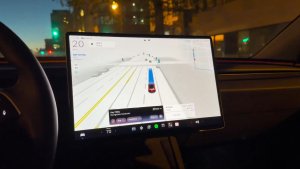
Is developing AI vehicles and the Optimus humanoid robot.
Has deployed 109GWh of energy storage globally.
Has successfully scaled up Gigafactories in record time.
Operates the first and only lithium refinery in the US.
xAI
Built the first GW-scale AI training cluster.
Operates the largest coherent supercomputer.
Is the only company capable of building orbital AI compute at scale.
SpaceX
Developed humanity's first reusable rockets.
Successfully returned human spaceflight capabilities to the US.
Currently launches 90% of global mass to orbit.
Operates the world's largest space-based internet network.
Houses the largest PCB manufacturing site in the US.
Built Starship, which is the world's most powerful rocket.
Scaling Challenge & the TERAFAB Solution
Scaling to this level requires massive numbers: 1 billion Optimus robots to do physical work, 10 million tons of mass launched to orbit per year, and over 1 TW of solar power needed.
The expected compute demand from Tesla and SpaceX in the future is 1TW.
Currently, Earth builds about 100-200GW of compute per year, which is constrained by local grids.
Current global AI compute production is only around 20GW per year.
Existing fabs can only achieve 2% of Elon's ultimate goal.
TERAFAB: the next step to becoming a galactic civilization
— SpaceX (@SpaceX) March 22, 2026
Together with @Tesla & @xAI, we're building the largest chip manufacturing facility ever (1TW/year) – combining logic, memory & advanced packaging under one roof pic.twitter.com/p6bX3VotXl
While Tesla and SpaceX are handling solar production and launch capacity, respectively, a terawatt of compute is the missing item.
Elon will continue to work with suppliers like TSMC and Samsung, and will continue buying as many chips as possible as they expand.
However, because these suppliers will not expand fast enough, Terafab is the solution.
The TERAFAB project is a joint effort between Tesla and xAI/SpaceX.
It represents the largest chipbuilding exercise in history by far.
The scale is larger than any other level envisioned, and is out of context by several orders of magnitude.
The ultimate goal is to reach a terawatt of compute production per year.
Advanced Technology Fab
The facility will be an Advanced Technology Fab located in Austin, just outside Giga Texas.
It will include chips, memory, and lithography masks.
Having logic, memory, and packaging in one site leaves it ready for rapid testing and iteration.
A single building can make the mask, make the chip, test the chip, and then make improvements.
This cycle of recursive improvement is what will make a difference.
The fab won't stick to regular chips; it will try other types of chips that push the limits of physics.
Next-Gen Chips & Space Compute
The Terafab will produce several new chips:
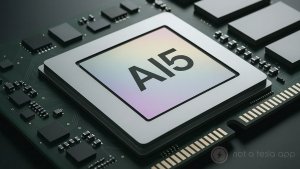
AI5: Powering FSD & Optimus.
AI6: Powering Optimus.
D3: Powering Compute in Space.
Looking at future chips, humanoid robots will require 10 to 100 times more chips than cars.
Ultimately, space compute will be the vast majority of compute.
To achieve this, Starship will enable a massive payload to space specifically for space-based compute.
AI Sat Mini
The AI Sat Mini will be a 100kW unit, while future satellites will go to the megawatt range.
Each AI Sat Mini should be approximately 1 ton.
When unfolded, including the solar panels and radiators, it will be wider than Starship V4 is tall.
SpaceX knows how to deal with heat projection in space and can handle the cooling issues.
Advantages of Space Compute
Chips designed for space will be hardened for the hostile environment and optimized for space.
They can be a higher power chip and can run hotter in space.
Space compute has no power constraint like on Earth.
Because space is always sunny, these chips can run 24/7.
Therefore, there is no need for battery backups to keep the chips running.
Space solar costs less than terrestrial solar due to not needing framing or heavy glass for weather protection.
There are increased economies of scale in space, while on Earth, you get challenges with real physical locations.
It is likely only a few years before it's cheaper to send chips up to space, rather than build a facility on the ground.
Lunar Mass Driver & Future Abundance
After the Terafab, the obvious next question is achieving a petawatt of compute.
To reach this, Optimus and humans on the moon will be used to send compute to deep space.
There is no need for rockets on the moon; payloads can accelerate using an electromagnetic mass driver to space.
Electromagnetic mass drivers on the Moon pic.twitter.com/NNDY6L2jSx
— SpaceX (@SpaceX) March 22, 2026
This infrastructure reduces costs even further.
The overarching goal is to complete this within Elon's lifetime.
Ultimately, an era of Amazing Abundance will become possible, driven by sustainable energy, space travel, and AI & Robotics.
This will allow humanity to go beyond the Moon, go beyond Mars, and take a trip through the rings of Saturn.
You can watch the entire video here:
Announcing TERAFAB: the next step towards becoming a galactic civilization https://t.co/xTA70LOU0e
— SpaceX (@SpaceX) March 22, 2026