The Boring Company is looking to take its underground transportation vision well beyond the Las Vegas Strip. Following a nationwide search for new project sites, Elon Musk’s tunneling firm has officially announced the winners of its "Tunnel Vision Challenge," identifying three major U.S. cities that could soon see their own high-tech transit loops.
According to a recent update from The Boring Company (@boringcompany), the winners of the challenge include the NOLA Loop in New Orleans, the Ravens Loop in Baltimore, and the University Hills Loop in Dallas. These projects were selected from a pool of submissions opened in January, and the company is prepared to put its own money where its mouth is. "If all 3 projects are feasible, will fund/build all 3 — this would be awesome," the company stated on X.
Expanding the Underground Network
Before the machines start digging, the projects must undergo a rigorous due diligence process funded entirely by The Boring Company. This includes meeting with elected officials, conducting geotechnical borings, and investigating existing subsurface infrastructure. In addition to the three primary passenger loops, the company is also exploring a utility tunnel in Hendersonville, Tennessee, and a specialized tunnel for Morgan's Wonderland in San Antonio, Texas.
These projects join a rapidly growing list of commitments for the firm. While the Vegas Loop remains the only fully operational system — having transported over two million people since 2021 — the company is branching out. It has already been tapped for an underground system at Universal's theme parks in Orlando, unveiled plans for a “Music City Loop” in Nashville, Tennessee, last summer, and recently confirmed that its first international Loop project in Dubai will begin construction soon.
The Role of Tesla and FSD
The backbone of every Boring Company project is Tesla. Instead of traditional subway cars, these loops exclusively use Tesla vehicles to ferry passengers through the narrow tunnels. This allows for a more personalized, point-to-point transit experience rather than stopping at every single station.
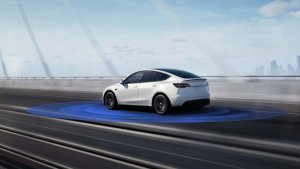
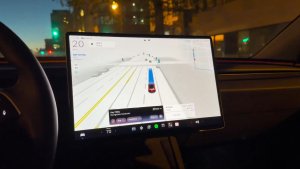
Recently, the company has even begun integrating Tesla's Full Self-Driving (FSD) system into its tunnel operations. While drivers are currently present, the ultimate goal is to achieve fully unsupervised autonomy. Because the tunnel environment is a "closed loop" with no pedestrians, cross-traffic, or unpredictable weather, it serves as the perfect controlled environment for Tesla to perfect its FSD software. As Tesla moves toward the mass production of its Cybercab next month, these tunnels could become an excellent showcase for how a driverless society actually functions.
A Forward-Looking Transit Solution
By funding these projects itself, The Boring Company is attempting to bypass the usual bureaucratic delays associated with public transit. If the feasibility studies in New Orleans, Baltimore, and Dallas return positive results, we could see construction begin much faster than a traditional light rail project.
It's a bold bet on the future of urban mobility. If these new loops can replicate the success of the Vegas network, it may not be long before "tunnel vision" becomes the standard for avoiding gridlock in every major U.S. city.