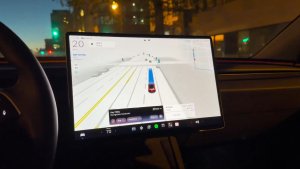
For owners of Tesla vehicles equipped with HW3, the wait for the latest FSD updates has become a tense waiting game. FSD v12.6.4 was the last update released on Tesla’s legacy hardware about 13 months ago, and it was an incremental update to previous versions within the same major build.
As Tesla’s end-to-end neural networks grow increasingly massive and complex, the AI team is struggling to fit its most capable versions of FSD, like v14, onto the older computers. Tesla has said it intends to prepare an FSD v14-lite build for HW3 vehicles in Summer 2026, but FSD development has slowed down drastically in recent months due to the focus on Robotaxi and Unsupervised FSD.
That leaves little time for the team to work on optimizing a modern build for legacy vehicles. However, a recent breakthrough from NVIDIA in the world of Large Language Models (LLMs) might just hold the conceptual key to how Tesla can keep HW3 highly capable without completely lobotomizing FSD.
The HW3 Bottleneck: It’s All About Memory
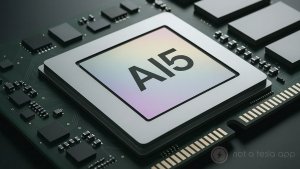
To understand the solution, we have to understand the bottleneck. While HW3 has less raw computational power than the newer AI4 hardware, its biggest limiting factor for modern AI is actually memory.
When you run a massive neural network, it requires a significant amount of working memory to function in real-time. In LLMs like ChatGPT, this working memory is called the KV (Key-Value) cache, which stores the context of your conversation so the AI doesn't have to re-read the entire chat history for each new prompt.
Tesla's FSD operates on a very similar principle. The car utilizes spatial-temporal memory to remember the driving context over time. If a pedestrian walks behind a parked delivery truck, the car’s temporal memory tracks that the pedestrian is still there, even if the cameras can no longer see them. As FSD gets smarter, this temporal memory cache grows larger, quickly exhausting the limited RAM available on the HW3 computer.
NVIDIA’s 20x Compression Breakthrough
This is where NVIDIA’s latest innovation comes in. As reported by VentureBeat last week, NVIDIA’s researchers have introduced a new technique that shrinks the memory footprint of an LLM's working cache by a staggering 20x.
The most important part is that they did it without changing the model's actual weights.
The technique, called KV Cache Transform Coding (KVTC), borrows a concept from classical media compression formats like JPEG. Instead of permanently deleting information, the algorithm identifies the most critical components of the working memory and compresses the rest on the fly.
Previously, to fit massive AI models onto constrained hardware, developers had to permanently alter the model through "quantization" or "pruning" (literally cutting out neural pathways). While this saves space, it often degrades the AI's intelligence.
NVIDIA’s new approach avoids this entirely. By aggressively compressing the working memory during inference, the LLM maintains its original, uncompromised intelligence with less than a 1% accuracy penalty, all while using a fraction of the hardware memory.
Applying the JPEG Method to Neural Networks
While NVIDIA’s research is focused on text-based LLMs, the underlying math and architecture may be able to be adapted for the vision-based AI running in your Tesla.
If Tesla's Autopilot engineering team applies a similar dynamic memory sparsification or transform coding to FSD's spatial-temporal memory, the results for HW3 could be game-changing. By highly compressing the "video memory" of the car's recent surroundings in real-time, Tesla could drastically reduce the total VRAM required to run the software.
Why does this matter? Because freeing up that memory cache means Tesla wouldn't have to shrink the core intelligence of the neural network to make it fit.
Instead of delivering a heavily pruned v14-lite that removes millions of parameters and degrades the car's driving capability, Tesla could ship a much more capable version of the v14 model to HW3. The car would still be running the highly advanced, end-to-end driving logic; it would just be utilizing a highly compressed, ultra-efficient JPEG-style temporal memory to stay within the hardware's limits.
Squeezing the Silicon
There is no denying that HW3 is aging silicon. Eventually, the hardware will reach a hard ceiling where it simply cannot process the data fast enough to keep up with the demands of unsupervised autonomy.
However, NVIDIA’s KVTC breakthrough proves that the AI industry is finding radical new ways to optimize software inference without needing bigger, more expensive chips. As Tesla races to unify its fleet on the v14 architecture, advanced memory compression techniques like these are exactly how the company will squeeze every last drop of capability out of its legacy hardware until the HW3 upgrade happens.