Tesla is rapidly transforming from an electric car manufacturer into an artificial intelligence powerhouse, and the primary vehicle for that change is its Full Self-Driving (FSD) software. While the system has been a staple of the North American driving experience for years, 2026 is shaping up to be the year the "FSD flywheel" finally goes global.
Tesla's ultimate goal is to transition from the current "Supervised" version — where a human must stay attentive and ready to take over — to a fully "Unsupervised" system. This would allow the vehicle to act as a true robotaxi, capable of navigating complex environments without any human intervention. To get there, Tesla needs a massive variety of data from different road networks, weather conditions, and traffic laws, which is why the company is aggressively pushing into new international markets.
What is FSD (Supervised)?
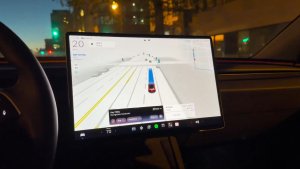
Before diving into the roadmap, it is helpful to understand what the software actually does. Full Self-Driving (Supervised) allows a Tesla to navigate city streets, handle intersections, make turns, and manage lane changes on its own. Unlike older "rules-based" systems that were programmed with specific "if-then" commands, the current v14 architecture is an end-to-end neural network. It has learned how to drive by watching millions of hours of high-quality human driving footage.
Currently, users in the U.S. and Canada are on FSD version 14.2, though Elon Musk recently confirmed that version 14.3 is already in testing and should see a wide release soon.
The Current FSD Map
As of March 2026, the list of countries with official access to FSD (Supervised) includes:
North America: United States, Canada, and Mexico.
Asia-Pacific: Australia, New Zealand, and South Korea.
China: Available but currently limited by local data laws. Tesla is working toward a wider rollout this year now that its local data center is operational, ensuring all sensitive mapping data stays within the country.

South Korea was the most recent major addition to this list, notably becoming the first region outside of North America to utilize the advanced v14 software architecture.
Europe: The Next Big Frontier
Europe has long been the "final boss" for Tesla’s regulatory team. For years, the rollout was stalled by the UN R-171 regulation, which was written for basic steering assists rather than advanced AI. However, Tesla has found a way through that leverages EU Article 39.
By partnering with the RDW (the vehicle authority in the Netherlands), Tesla has conducted over 1.6 million kilometers of testing specifically on European roads to prove the system's safety. Tesla and the RDW have signaled that a landmark formal approval is slated for April 10, 2026. Once the Netherlands gives the green light, a "mutual recognition" mechanism allows other EU member states to adopt the approval, likely leading to a cascade of launches across the continent over the following months.
Israel: "Coming Soon"
The Middle East is quickly becoming a priority for Tesla. In Israel, a passionate group of owners even launched a petition with over 1,000 signatures to urge the government to approve the tech. The pressure worked; Israel’s Minister of Transport, Miri Regev, recently teased that the software is "coming soon.”
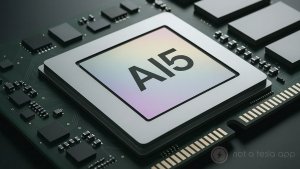
Because a high percentage of Teslas in Israel are newer models equipped with AI4 (Hardware 4), the fleet is already physically ready.
United Arab Emirates (UAE): Road Trials Underway

The UAE is currently in the middle of official road trials overseen by Abu Dhabi Mobility. These government-regulated tests are designed to verify how the AI handles the unique environmental conditions of the region before a public release. While a January 2026 target was originally set, the current testing phase suggests a wide rollout is in the works, so it might not be long before the UAE joins the FSD club.
Japan: Conquering the Complex
Japan represents one of the most difficult driving environments for AI due to its narrow streets and very specific traffic rules, like the requirement to stop fully before every crosswalk. Tesla officially announced earlier this month that it aims to launch FSD in Japan by the end of 2026.
The company recently added the Model Y to its Japanese FSD testing fleet to gather data across different vehicle heights. "We are trying everything we can to implement this system by 2026," said Riichi Hashimoto, President of Tesla’s Japanese subsidiary. If approved, the software could be pushed to the approximately 40,000 Teslas already on the road in Japan via a simple update.
Where Else Could FSD Land?
Beyond these confirmed markets, rumors are swirling about where Tesla might look next. Based on recent comments from Musk and regional testing sightings, these are the dark horses that could be next to receive FSD further down the road:
United Kingdom: Following the EU approval, the U.K. is a logical next step, though the left-hand traffic adds a layer of complexity similar to the Australian rollout.
Saudi Arabia: Given the push for high-tech "smart cities" in the region, Saudi Arabia could follow quickly behind the UAE.
Brazil: While South America has been quiet on the FSD front, Brazil’s growing Tesla fleet makes it the most likely candidate for a continental debut.
The Global Flywheel
Tesla’s move into Europe, Japan, and Israel isn't just about selling a software package; it’s about safety and data. Every kilometer driven in a new country helps the neural network understand different human behaviors and road layouts. This global expansion will form the foundation for Tesla’s Robotaxi network, which the company is currently piloting in Austin with unsupervised rides.
As the RDW’s approval of FSD in the Netherlands looms for April, the "molasses" era of international FSD is officially over. We could be moving into a period of rapid-fire launches that will determine if Tesla can truly become the first company to solve autonomy on a global scale.