A recently published Tesla patent has been making the rounds in the community over the last few weeks and has sparked claims about custom, easily upgradable vehicle computers.
Credited to a team of engineers that includes Mohamed Haitham Helmy Nasr and Cindy Au, the document outlines a liquid-cooled processing system with replaceable modules. However, a closer look at the actual text reveals a much more practical reality. This patent is not about letting owners swap out their old hardware for the latest iteration, but rather about completely overhauling how service centers repair broken systems.
It is important to note that this patent application was originally filed on September 26, 2024, and officially published on March 26, 2026. This specific iteration of this patent focuses on replaceable vehicle computer modules, and is a follow-up to Tesla’s 2020 patent on the HW3 sandwich compute package.
The Challenges with Hardware 3
To understand the immense value of this new invention, we have to look at how Tesla currently builds its computers. The patent actually highlights the system Tesla has been using since Hardware 3 as the primary problem it aims to solve.
In the current setups found in most modern Tesla vehicles, Tesla’s engineers have sandwiched the infotainment and Autopilot boards between two liquid-cooled plates. These boards are permanently bonded to the metal using curable thermal interface materials.
Because of this glue-like thermal paste, a service center cannot simply remove a dead infotainment board without specialized, factory-level robotic equipment. Consequently, if a single component fails, Tesla is forced to throw away and replace the entire expensive dual-board computer.
Repairability, Not Upgradability
This newly published patent addresses the issue of expensive waste by introducing a truly serviceable architecture. Instead of permanent thermal glue, the new design utilizes specialized interposers, tacky gap pads, and dry seals. This allows technicians to easily unbolt and separate the individual circuit boards from the central cooling plate without compromising the system's thermal integrity or creating a massive mess.
The patent explicitly states that the primary goal is to enable the individual replacement of an electronic module to drastically reduce both hardware and service costs. This means a technician can finally swap out a faulty media control unit while retaining the perfectly functional and very expensive AI computer. It is entirely about making the compute package repairable at the local service center level rather than making it a plug-and-play upgrade for consumers.

What “Modular” Actually Means
The use of the word "modular" in the patent title has led many to envision a PC-building experience in which individual chips or memory banks can be snapped in and out at will.
Unfortunately, that is simply not what Tesla is doing here. The actual silicon chips and memory modules are still permanently soldered directly to the printed circuit boards. In the context of this patent, the term "modular" refers solely to the ability to decouple the entire circuit board assembly from the cooling plate without breaking a permanent thermal seal.
Why Not Upgrades?
This also does not mean that an entire board can be easily swapped out for a new one. Even if a service center could physically unbolt a Hardware 3 board and successfully attach a next-generation AI5 computer to the existing cooling plate, the rest of the vehicle simply cannot support the newer technology.
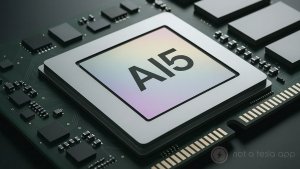
For instance, the upcoming AI5 architecture has a much higher peak power consumption of roughly 800 watts. This massive power draw would completely overwhelm the power delivery electronics and the physical cooling package constraints originally designed for older vehicles.
Additionally, upgrading the central computer does not magically upgrade the rest of the car. Newer hardware suites require entirely different wiring harnesses to handle the massive data-transfer demands of upgraded high-resolution cameras.
Plus, modern vehicles like the Cybertruck, the refreshed Model Y, and the rest of the 2026+ lineup feature entirely new sensor placements, including a dedicated front-bumper camera to improve low-speed maneuvers. Older vehicles lack the physical wiring, bumper cutouts, and power infrastructure to support these new sensors, making a simple plug-and-play board swap physically impossible.
The Clever Engineering
To make this system work without permanent adhesives, Tesla had to engineer clever workarounds to ensure the two boards could still communicate and shed heat effectively. The system uses a male board-to-board connector on the first board and a female connector on the second board, which are physically linked via dedicated openings in the central cold plate to seamlessly share power and data.
To make life easier for service technicians, the physical fasteners, the board-to-board connectors, and the fluid ports are all designed to be completely self-aligning. The fasteners literally snap into place to ensure the boards align perfectly without risking bent pins or damaged components during a repair swap.
Heat management was also carefully thought through in this new modular design. Tesla specifically notes that the higher-power AI processors generate significantly more heat than the lower-power media control unit processors. Because of this, the design intentionally places the AI computer closer to the primary cold plate, with fewer thermal layers between them to maximize cooling efficiency.
To transfer the heat from the secondary board down to the cooling plate without using permanent thermal glue, the system relies on a specialized interposer. This interposer can be outfitted with highly conductive copper blocks, vapor chambers, or heat pipes to efficiently pull the thermal energy into the replaceable gap pads.
Finally, in alternative designs in which both boards have their own distinct cold plates, the cold plates are connected in series using a single coolant inlet and outlet. The ports connecting the two separate plates use a push-to-seal connection with integrated O-rings, which effectively prevents coolant from dripping onto the sensitive electronics while a technician is separating the modules.
While this might disappoint those hoping for an easy pathway to upgrade older cars to future iterations of Full Self-Driving hardware, it represents a massive win for repairability. By making these systems individually serviceable, Tesla is positioning itself to save millions of dollars in warranty repairs while simultaneously lowering out-of-warranty replacement costs for long-term owners.