Tesla is officially taking the training wheels off its autonomous ride-hailing service in its home city. After launching fully unsupervised rides with no safety driver or monitor back in January, the company has now more than doubled the size of its "driverless" geofence in Austin, Texas.
According to Tesla enthusiast and frequent rider @iamjesserichard, the boundary has crossed a major physical milestone. “Tesla Unsupervised Geofence expanded! It’s across the river now and taking me downtown,” Richard shared on X. This expansion marks the first time Tesla’s fully autonomous fleet has been permitted to operate north of the Colorado River, providing a direct link into the heart of downtown Austin.
Crossing the River: A Major Milestone
Since the pilot program began last summer, Tesla has been cautious with its unsupervised rollout. While the standard Robotaxi service (which still utilizes a safety monitor) grew to 12 times its original size last fall, the truly "unsupervised" portion remained a much smaller subset of that area.
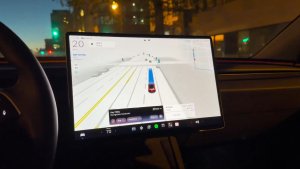
The new expansion is significant because it introduces the AI to the complex, high-traffic environment of a major metropolitan downtown area. A visual representation of the geofence shows the zone for unsupervised operation stretching significantly further north than the original Robotaxi boundaries from June 2025. While only a small fraction of the Austin fleet currently operates without a human in the front seat, Tesla is gradually transitioning more vehicles to this fully unsupervised mode as the software proves its reliability in the wild.
Scaling the Robotaxi Vision
Tesla is currently in the middle of a massive technological race, and expanding its operational geofence is the key to winning. By proving it can handle the dense infrastructure of Austin, Tesla is laying the groundwork for a much larger rollout. Recent evidence suggests the company is already preparing to launch the service in Las Vegas, Nevada, and Dallas, Texas.

The service is also becoming more mature as a consumer product. Tesla recently lowered the minimum age to ride in a Robotaxi to just eight years old, provided an adult is present. However, the company is also starting to look at the bottom line; it raised Robotaxi fares twice earlier this month, indicating that the demand for autonomous convenience is high enough to justify a premium.
The Road to Full Autonomy
This expansion is a clear sign that Tesla is becoming more confident in its neural-network-driven approach. By mastering the streets of Austin, one neighborhood at a time, the company is gathering the specific data needed to eventually remove safety drivers in every city it enters.
As more “unsupervised” zones appear on the map, the day when you can summon a completely empty car for a ride across any major city feels less like a science fiction movie and more like an impending reality. We’ll be watching closely to see if the downtown Austin data leads to an even bigger leap across other Texas metros this spring.