For new electric vehicle owners, shifting away from the gas station model is often the biggest adjustment. Rather than making a dedicated stop to refuel, the EV paradigm centers on overnight home charging. You simply plug in your vehicle when you park for the evening and wake up to a full battery every morning.
However, navigating the world of charging hardware, electrical amperages, and installation logistics can be overwhelming. Using the immensely popular Tesla Model Y as our benchmark, here is everything you need to know about setting up your ideal home charging experience.
Gold Standard: Wall Connector

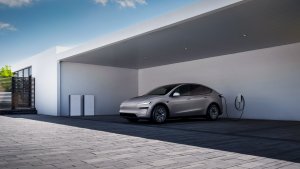
If you own a single-family home and want the absolute fastest residential charging speeds, a dedicated hardwired unit is the way to go. Tesla's official Wall Connector currently retails for around $450 and can deliver up to 48 amps of continuous power on a dedicated 60-amp circuit.
For a Model Y, this translates to roughly 44 miles of range added per hour of charging. This provides incredible peace of mind if you frequently arrive home with a near-empty battery and need to head back out quickly.
While the maximum amperage is 48 amps, it can be configured to a lower amperage to meet your home’s capability.
The caveat here is the installation cost. Because the Wall Connector requires a hardwired connection directly to your electrical panel, most owners would want to hire a licensed electrician. Depending on the physical distance from your panel to the garage, and whether your home requires a larger panel upgrade to handle the extra electrical load, installation can cost anywhere from $500 to over $2,000.

In addition, the Wall Connector can connect to WiFi and offer additional options not available with other solutions. You can limit charging to certain vehicles or times of day and gain better insight into your charging habits.
The Wall Connector will track your daily charging and display it directly in the Tesla app.
Versatile Option: Mobile Connector

If you are looking for a more cost-effective or flexible solution, the Tesla Mobile Connector is an excellent choice. Retailing for around $300, this portable unit lets you swap out adapter plugs to match various electrical outlets.
If you plug the Mobile Connector into a standard 120-volt household outlet, it will draw 12 amps. This is commonly referred to as "trickle charging" and will only add about three to four miles of range per hour. While this may sound slow, a 12-hour overnight charge will still yield roughly 40 miles of range, which is enough to cover the daily commute of the average North American driver. However, if you travel anything more than your commute, or have cold winters, trickle charging will quickly become a chore.
For significantly faster speeds without the hardwired installation, you can have an electrician install a standard 240-volt outlet, much like the one your clothes dryer uses. Plugging the Mobile Connector into a 240-volt NEMA 14-50 outlet allows the vehicle to draw up to 32 amps, returning roughly 30 miles of range per hour.
Installing a high-voltage outlet is generally much cheaper than hardwiring a permanent Wall Connector, making this the sweet spot for most homeowners.
Matching Hardware to Your Lifestyle
When deciding between a 12-amp trickle charge, a 32-amp outlet, or a 48-amp Wall Connector, the most important metric is your actual daily mileage. The beauty of overnight charging is that the speed rarely matters while you are asleep.
If you drive less than 20-30 miles a day, a standard household outlet may serve you perfectly fine. If you drive 40+ miles a day on average, you will absolutely need a 240-volt solution. The goal is simply to replenish what you used that day, rather than trying to charge a battery from 0 to 100 percent every day.
The Apartment Dweller Dilemma
While homeowners can easily dictate their charging setups, renters and apartment dwellers face a completely different landscape. If you live in a multi-unit dwelling, your charging options rely heavily on your building management.
Many modern apartment complexes are beginning to install shared Level 2 charging stations in their parking garages. These are typically managed by third-party networks that bill you directly for the electricity used. However, sharing a handful of chargers among dozens of EV-driving residents requires active coordination and strict etiquette to ensure everyone gets a turn to plug in overnight.
If your building does not currently offer charging, some landlords are open to installing 240-volt outlets in assigned parking spaces, especially if the tenant agrees to cover the initial installation cost.
Street Charging Solutions
For drivers who rely entirely on street parking, the feasibility of EV ownership depends almost entirely on local infrastructure. In North America, residential street charging is still incredibly rare. However, the Canadian province of Quebec serves as a shining exception. The widely successful Circuit Électrique network provides thousands of curbside Level 2 chargers throughout Montreal and surrounding areas, allowing urban residents to plug in right on the street.
Across the Atlantic, European countries have integrated street charging seamlessly into urban life. Cities across the United Kingdom and Germany have retrofitted thousands of curbside lampposts with charging sockets. Residents simply park on the street, plug a portable cable directly into the nearest streetlight, and charge overnight just as easily as a homeowner with a private garage.
Comparing Your Home Charging Options
To help summarize the various paths to home charging, here is a breakdown of standard hardware configurations based on the Tesla Model Y. Note that the Expected Costs section provides broad estimates that include both the charging hardware and the typical fees for professional electrical installation.
Hardware Option (Circuit) | Charge Rate | 0 to 100% Charge Time | Expected Upfront Costs |
|---|---|---|---|
Mobile Connector | ~3 to 4 miles per hour | ~50+ hours | $300 (charger Only) |
Mobile Connector | ~21 miles per hour | ~14 hours | $500 to $800 |
Mobile Connector | ~30 miles per hour | ~10.5 hours | $600 to $1,000 |
Wall Connector | ~44 miles per hour | ~7 hours | $950 to $2,500+ |