Elon Musk recently confirmed that the highly anticipated FSD v14.3 update is officially in the hands of employee testers and will be rolling out to early-access customers in the near future.
After a series of incremental FSD v14.2 patches focused on stability, the upcoming v14.3 release could be a big jump in FSD capabilities. This could include anything from intelligent parking features to Banish, to controlling FSD with your voice.
Let’s take a look at some of the FSD features we’ve been waiting for that could be included in FSD v14.3.
Next-Level Reasoning and Pothole Avoidance
Musk recently updated the FSD v14 roadmap, noting that this specific set of updates is designed to make the vehicle feel almost sentient. While previous versions relied heavily on reacting to immediate obstacles, v14.3 is expected to introduce a massive upgrade in real-time reasoning. The neural network will be able to apply complex logic to edge cases and unpredictable urban environments on the fly.
This upgraded reasoning directly translates to a smoother, safer ride. In the v14.2 update, Tesla introduced major improvements to road debris avoidance. Version 14.3 could take this a step further by introducing advanced pothole detection and avoidance. The vehicle could recognize degraded road surfaces and smoothly adjust its path to protect your tires and suspension without erratic swerving.
In the video below, FSD changes lanes to avoid what was simply a shadow on the road, but this could easily have been a larger pothole.
Fsd 14.2.2.5 swerves for a shadow. I disengaged and reported the issue pic.twitter.com/7bse3vKymK
— Elias Martinez (@EliasMartinez) March 20, 2026
Actually Smart Summon for Cybertruck
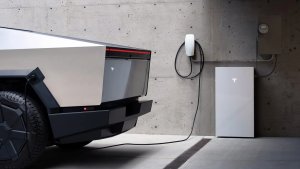
Tesla’s Actually Smart Summon feature has been a game-changer for retrieving vehicles from crowded parking lots, but the angular Cybertruck has notoriously been left out of the fun.
With the recent end of the NHTSA investigation into Actually Smart Summon, we expect the first version of Summon to finally roll out for Cybertruck owners. In addition, we’re hoping to see some improvements to Smart Summon’s logic based on improvements to Tesla’s Robotaxi FSD builds for low-speed maneuvering in tight spaces.
That means better reliability, smoother navigation around pedestrians, and more decisive routing in complex parking lots.
We’re hoping that these improvements arrive in FSD 14.3.
Banish and Smarter Parking
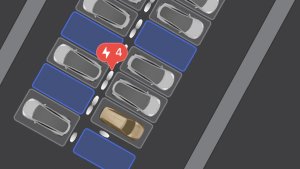
Perhaps the most-requested feature in v14.3 is Banish. Serving as the ultimate evolution of Autopark, Banish would allow a driver to step out of the vehicle at the entrance of their destination. The car could then autonomously navigate the parking lot, locate a valid space, and park itself.
To support this, Tesla is likely overhauling its parking logic. Early versions of Autopark occasionally struggled with contextual spot selection, sometimes attempting to use handicap spaces or failing to pull into designated Supercharger stalls.
FSD v14.3 may bring improved parking spot selection, ensuring the vehicle intelligently identifies legally available spots.
While we have been waiting for Banish for years, we’ll likely see improvements to parking and parking spot selection before its eventual release.
Vehicle-to-Fleet Communications
One of the most exciting additions coming to FSD is the introduction of Vehicle-to-Fleet Communication. This feature was originally announced all the way back for the v12.4 release, but ultimately never materialized.
This technology would allow Teslas to share highly localized, real-time data with the rest of the fleet. If one Tesla encounters a severe pothole, a temporary road closure, or a sudden traffic hazard, it would instantly alert the rest of the fleet. Other Teslas approaching the same area would automatically receive this information and adjust their speed or routing before the hazard is even visible on their cameras.
Tesla is likely already employing a similar strategy for routing its Robotaxis, but seeing this logic come to the fleet at large would be another big step towards true Unsupervised autonomy.
Expanded Front Camera Cleaning
As Tesla pushes closer to unsupervised autonomy, keeping the vehicle's cameras clean is absolutely critical. Last year, Tesla introduced a front camera cleaning technique that improves the cleaning of the front-facing cameras, but it has been limited to the newer 2026+ Model Y variants.
We could see Tesla expand software support to additional vehicle variants.
While the focus of FSD 14.3 is on improved reasoning, we’re likely to see the introduction of other FSD features we’ve been waiting on, such as improved parking selection.
FSD v14.3 is shaping up to be one of the most important FSD updates in recent memory. We will be keeping a close eye on the early-access rollout that’s expected to happen over the next week or two.