Tesla officially started releasing Full Self-Driving (Supervised) v14.3 on Tuesday. This major update, which CEO Elon Musk has previously called "the last big piece" of the self-driving puzzle, is now rolling out to early public testers. It follows a brief internal testing period where employees spent the last week validating the build.
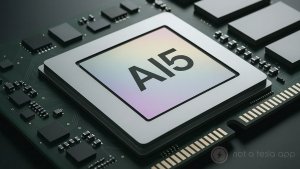
According to the official release notes, v14.3 introduces a "completely rewritten AI compiler and runtime from the ground up with MLIR." This technical overhaul is a big deal for the average driver because it results in a 20% faster reaction time for the vehicle. In the world of AI, speed is safety, and this faster processing allows the car to make split-second decisions with much more confidence.
Update 2026.2.9.6
Percent of Fleet
Installs on Apr 17
Fleet Learning and 3D Geometry
The most significant shift in v14.3 is the introduction of vehicle-to-fleet communication and reasoning. Tesla is now using its global fleet to source "infrequent events" and "hard RL examples" to train the neural network. This means your car is effectively learning from the most difficult scenarios encountered by millions of other Teslas, such as complex intersections with compound lights, curved roads, and even the behavior of small animals.

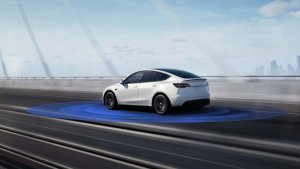
The vision encoder has also been upgraded, which we correctly predicted would strengthen 3D geometry and traffic sign understanding. This allows the car to better "see" objects that are hanging or leaning into the road, like low tree branches or construction equipment. The release notes also mention better performance in low-visibility scenarios, potentially improving how the system handles bad weather.
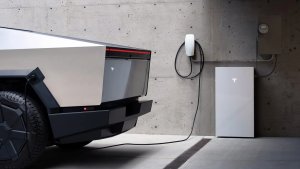
For Cybertruck owners, there is extra good news: the release notes are identical to the Model Y, meaning the Cybertruck is finally receiving FSD parity with Tesla's mainstream models. FSD v14.3 also brings the “Parked Blind Spot Warning” feature to the Cybertruck, which prevents passengers from opening doors into oncoming traffic, cyclists, or pedestrians.
Smarter Parking, But No Banish
While the update is packed with driving improvements, some fans might be disappointed to see that Actually Smart Summon (ASS) didn't get any specific love. There is also still no sign of "Banish," the fabled feature that would allow your Tesla to drop you off and then autonomously find its own parking spot.
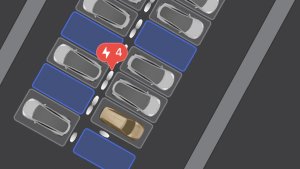
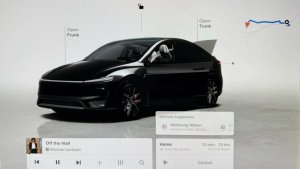
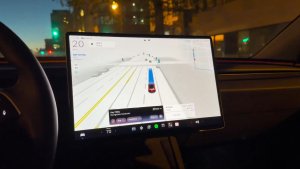
However, v14.3 does lay the groundwork for Banish with "increased decisiveness of parking spot selection and maneuvering." The car is now much better at predicting parking spots, which will now be shown on the map with a specific "P" icon. It has also improved its ability to recover from "temporary system degradations" without needing the driver to take over, which is a key requirement for a truly driverless parking experience.
Potholes and Better Monitoring on the Horizon
The release notes also give us a rare "Upcoming Improvements" section, which will likely roll out in point releases over the coming weeks. One of the most requested features, pothole avoidance, is officially on the list. Tesla also plans to expand AI reasoning to all driving behaviors, moving beyond just destination handling, and significantly improve the driver monitoring system.

The new monitoring tech will feature higher accuracy in variable lighting and better eye gaze tracking, even for drivers wearing sunglasses. This suggests Tesla is getting very close to allowing longer periods of "hands-off" driving while ensuring the driver is still paying attention.
With v14.3, the dream of a truly autonomous Robotaxi network feels closer than ever. Tesla is no longer just writing code; it is teaching a global brain to drive.