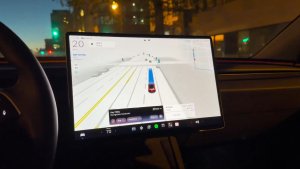
Tesla officially rolled out FSD (Supervised) v14.3 to early-access testers, and the initial impressions are already pouring in. Following up on the highly anticipated release notes, early drivers across the Cybertruck, Model 3, and Model Y fleets are reporting massive gains in smoothness, reaction speed, and parking confidence.
Overall, the day-one consensus is strongly positive. Here is a breakdown of what the first wave of testers is experiencing out on the roads.
Fast Reactions and Decisive Moves
According to the official release notes, FSD v14.3 features a rewritten AI compiler that delivers a 20 percent faster reaction time. Early testers are confirming that this optimization is incredibly noticeable in the real world.
First drive on Tesla FSD V14.3 completed.
— Nic Cruz Patane (@niccruzpatane) April 7, 2026
Smooth as always. There are things it does that definitely feel new, I just need more time to figure them out.
Onto some more testing at Costco! pic.twitter.com/sNMoUuqUnT
Multiple users noted that the car feels significantly quicker and more confident overall. Several early reports note that the increased reaction time is the biggest takeaway from the update, stating that the vehicle finds parking spaces faster and reacts to traffic lights much more quickly.
Instead of endlessly circling a parking lot or second-guessing, the vehicle now spots empty spaces and initiates its maneuvers immediately, including noticeably faster reactions to yellow lights.
Here is highlight clip #4 from my FSD v14.3 First Impressions Drive.
— Chuck Cook (@ChuckCook) April 8, 2026
Earlier Decisions on Highway Navigation??? pic.twitter.com/XE7RaZv78r
Smoother, Human-Like Driving
Perhaps the most repeated praise across the early-access fleet is the newfound smoothness of the system. Many drivers are describing the v14.3 experience as remarkably human-like.
Navigation tells FSD 14.3 to go the wrong way into a parking lot, but FSD seems to read the "Do Not Enter" sign and correct. pic.twitter.com/sA4HJE4Mmt
— Dirty Tesla (@DirtyTesLa) April 7, 2026
Testers are calling the drive super smooth, noting that it just feels much more natural. Several drivers have pointed out that the speed profiles have been toned down to reduce excessive speeding, resulting in a much more comfortable ride. Reports frequently highlight super confident yet smooth acceleration, with equally refined deceleration when approaching stops.
Here is highlight clip #1 from my FSD v14.3 First Impressions Drive.
— Chuck Cook (@ChuckCook) April 7, 2026
The Unprotected Left Turn. pic.twitter.com/XCoZWBTNWW
Next-Level Parking Performance
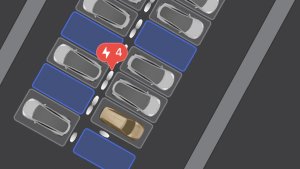
Parking has been a major focus for Tesla in recent builds, and v14.3 appears to take the Autopark feature to the next level.
Here is highlight clip #2 from my FSD v14.3 First Impressions Drive.
— Chuck Cook (@ChuckCook) April 7, 2026
First Parking Lot pic.twitter.com/cRcgHxEru5
Drivers are reporting that parking is noticeably quicker and more precise, with the vehicle's creeping behavior being praised as confident, decisive, and smooth. Testers have observed that the car selects parking spots much more quickly and decisively than previous versions, demonstrating greater confidence even when navigating more complex parking lot environments.
Here is highlight clip #7 from my FSD v14.3 First Impressions Drive.
— Chuck Cook (@ChuckCook) April 8, 2026
Looking for parking on a busy street. pic.twitter.com/J0YHKuX6oO
FSD 14.3 takes on DFW Airport parking garage 🅿️
— Spencer (@scotsrule08) April 8, 2026
Fantastic maneuvering by FSD. 10+ point turn to escape and handled flawlessly! Super impressive @Tesla_AI with @DavidMoss pic.twitter.com/cEdpmU0Qfs
Zero Interventions and Everyday Refinements
The overarching smoothness and faster reaction times are translating directly to fewer necessary interventions. Some users have already reported completing over 100 miles with zero interventions, noting that hesitation at roundabouts is completely gone, braking is smooth, and yellow-light handling is vastly improved.
Tesla FSD v14.3 vs Police hand cross pedestrian test with @scotsrule08 pic.twitter.com/1ptHORkVM1
— David Moss (@DavidMoss) April 7, 2026
Other drivers logging high-mileage, zero-intervention drives have observed fewer unnecessary lane changes and highly logical passing decisions, though a few noted the car occasionally lingers in the left lane on empty highways. Early highlight clips showcase v14.3 executing flawless unprotected left turns and clean parking lot maneuvers, alongside strong highway behavior and improved follow distances.
Early Quirks
As with any major FSD release, the first day of testing has revealed a few minor quirks and side effects from the new underlying logic.
One of the most notable changes in v14.3 is improved small-animal detection. However, testers have noticed that this heightened sensitivity occasionally causes the vehicle to apply light braking for blowing leaves. A few drivers have also experienced isolated instances of overly long waits at stop signs and slow acceleration from a full stop.
Additionally, some users observed minor parking errors in which the vehicle treated a hashed no-parking zone as a valid parking spot.
Here is highlight clip #5 from my FSD v14.3 First Impressions Drive.
— Chuck Cook (@ChuckCook) April 8, 2026
The thin chain test. pic.twitter.com/VFDJIgsU38
The Overall Consensus
While these are still day-one impressions, early testers are overwhelmingly calling FSD v14.3 a meaningful step forward in both confidence and refinement. The 20 percent faster reaction time provides a tangibly better driving experience, bridging the gap between robotic hesitation and smooth, human-like intuition. As the fleet logs more highway miles and tackles complex edge cases in the coming days, we will get a much clearer picture of just how capable this new architecture truly is.
Here is highlight clip #8 from my FSD v14.3 First Impressions Drive.
— Chuck Cook (@ChuckCook) April 8, 2026
Full Drive Recap. Full length video will be rending a while and up on @X For subscribers and YT for the public version. pic.twitter.com/Oa8dGbAFO6