During the Q1 2026 earnings call, Tesla provided an anticipated update on its unsupervised Robotaxi program. While the company is actively testing uncrewed vehicles on public roads, executives confirmed that a significant, wide-scale expansion of the commercial Robotaxi fleet will not occur until the release of Full Self-Driving v15.
FSD V15
To understand why Tesla is pausing a nationwide rollout, one must look at what v15 actually represents. Elon Musk described v15 as a “major architectural improvement” that would “improve the probability of safety significantly.” Ashok Elluswamy added that FSD v15 will be a major upgrade over the current v14.3 variance that’s running on Robotaxis today.
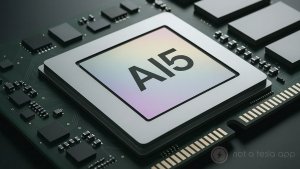
While Tesla claims the current v14 build is already statistically safer than a human driver, v15 is explicitly designed to reach the superhuman reliability required for mass commercialization. While Tesla has already said that FSD v15 will run on existing HW4 vehicles, it may also be optimized to run on AI4+ hardware, which Tesla plans to introduce next year.
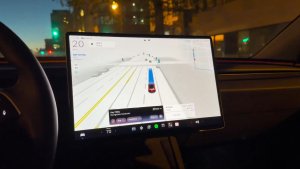
FSD v15 will allow the vehicle to navigate even more complex, multi-layered edge cases, such as predicting the movement of pedestrians obscured by large trucks or navigating chaotic, multi-lane urban roundabouts without hesitation.
Delayed Gratification
While Tesla is proceeding with the launch of Robtaxi in two new cities, they’re also intentionally holding back on mass deployment, as Musk said they don’t want to launch at scale while they have major improvements in the pipeline.
Deploying tens of thousands of uncrewed vehicles into major metropolitan areas introduces a staggering amount of physical risk, regulatory scrutiny, and corporate liability. If Tesla were to scale its Robotaxi fleet today, it would be scaling a v14 architecture that the engineering team already knows is about to be deprecated.
Validating a brand-new foundational AI model requires caution and millions of rigorous testing miles to ensure there are zero regressions in safety. By waiting for the v15 software branch to be deployed, Tesla ensures that when thousands of uncrewed vehicles finally flood public streets, they are operating on the definitive, long-term "brain" of FSD.
As a result, the massive commercial rollout of the Robotaxi fleet has been strategically aligned with the V15 timeline, targeting the end of 2026 or early 2027.
Next Robotaxi Cities
Despite pausing a nationwide rollout, Tesla is not sitting idle. The Q1 2026 slide deck reveals a highly targeted list of cities where the company is actively ramping up unsupervised rides and preparing the groundwork for future operations.
State | Metro Area | Status / Target |
|---|---|---|
California | SF Bay Area | Safety Driver (Current) |
Texas | Austin | Ramping Unsupervised |
Texas | Dallas | Ramping Unsupervised |
Texas | Houston | Ramping Unsupervised |
Arizona | Phoenix | Preparations Underway |
Florida | Miami | Preparations Underway |
Florida | Orlando | Preparations Underway |
Florida | Tampa | Preparations Underway |
Nevada | Las Vegas | Preparations Underway |
Tesla will likely deploy relatively small fleets into each of these specific markets. These limited deployments will serve as testing and validation beds, allowing the vehicles to learn the unique localized driving behaviors of each city ahead of the larger v15 rollout.