The legal battle over the intellectual property powering electric vehicle charging infrastructure has taken another turn.
Following a recent decision by the United States Court of Appeals for the Federal Circuit, Tesla has secured a partial victory in its ongoing patent dispute with Charge Fusion Technologies. The appeals court reversed a prior ruling on a specific climate-control charging patent, invalidating a claim held by Charge Fusion and remanding for further review of the other claims.
While this conflict may seem completely unrelated to the average Tesla owner, it’s linked to one of the things that makes Tesla ownership so simple - the Supercharger network.
The Climate Control Reversal
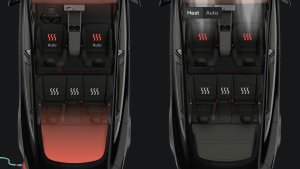
The recent appellate decision centers on a patent owned by Charge Fusion Technologies. The patent describes a smart EV charging system that automatically manages climate control parameters while a vehicle is parked and charging, such as maintaining air conditioning for a pet left inside the cabin.
Tesla previously challenged the validity of this patent before the Patent Trial and Appeal Board, arguing that the technology was obvious in light of prior inventions. The board initially ruled against Tesla.
However, in the latest appellate review, the federal court determined that the board used an incorrect legal interpretation for the primary claim. The court formally reversed the finding, declaring that the climate control claim was unpatentable.
While Tesla successfully invalidated the primary claim, the court upheld the validity of other claims involving more complex calculations related to battery capacity and charging time. The rest of these claims will be re-evaluated in upcoming legal proceedings.
Automated Charging Conflict
This partial victory comes just months after Tesla faced a setback against the exact same company. Earlier this year, the federal appeals court issued a split decision upholding a different Charge Fusion patent related to charging automation.
To put the legalese into context, this patent centers on plug-and-charge capabilities. Plug-and-charge is exactly what makes Supercharging so uniquely functional. Tesla owners can simply park at a charger, plug in, and move on without needing to manually initiate a charging session through a payment terminal, app, or vehicle controls.
The Importance of Software IP
As the physical hardware of electric vehicles and charging stations becomes increasingly standardized across the industry, the largest competitive moat for brands will lie in their ability to design and patent certain software architectures, including things as obvious as Pet Mode or plug-and-charge.
By challenging these patents at the federal level, Tesla is protecting its freedom to operate the Supercharger network in North America as it stands today.
The recent partial victory on the climate-control patent shows Tesla is willing to pursue lengthy litigation to protect the ease of use of the Supercharger network.