Tesla was recently granted a patent on "Automotive Perforated Insulated Glass Structure” in the United States, and while that may sound complex, there are several interesting techniques baked into the patent.
The patent document details how Tesla plans to manage cabin comfort, using a dual-layer panoramic roof that actively manages temperature and road noise.
The Perforated Architecture
The core of the patent replaces the standard single-pane automotive roof glass with a heavily multi-layered sandwich. The system utilizes a solid, traditional outer layer of glass to protect the cabin from weather and external elements. However, the interior layer facing the passengers is entirely different.
This interior pane is perforated with thousands of precisely drilled holes. Between the solid exterior layer and the perforated interior layer, there’s a gap. According to the patent, this void can range from 0.5 millimeters to 6 millimeters, while the holes themselves range from 0.05 to 2 millimeters in diameter. This cavity serves as the key to two major cabin improvements.
Active HVAC Integration

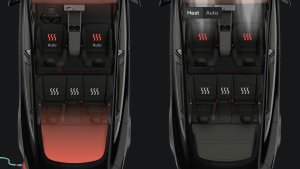
The primary function of this internal gap is thermal management. According to the filing, Tesla engineers intend to connect the vehicle's climate control system directly to the roof structure.
Hot or cold air is pumped from the HVAC system directly into the gap between the glass panes. The pressurized air is then forced evenly through the perforations directly into the cabin. This airflow creates a thermal barrier right at the source of the heat.
Historically, automakers have relied on tints and UV coatings to mitigate the greenhouse heating effect caused by panoramic roofs. By ventilating the glass itself, Tesla can effectively neutralize solar heat gain before it reaches the occupants, potentially enabling even larger, clearer glass in future vehicles.
Acoustic Dampening
Beyond climate control, the perforated glass also doubles as an acoustic dampener. Because EVs lack an internal combustion engine to mask ambient sound, wind, and tire noise become more prominent. The patent details how this new glass assembly can be mathematically tuned to absorb specific frequencies of road noise.
Engineers can change the acoustic resonance of the roof by altering the diameter of the perforations, adjusting the thickness of the inner glass pane, and changing the size of the gap. By tweaking these variables, Tesla can effectively design a roof that swallows the exact pitch of highway wind noise.
Honeycomb Matrix
To further improve this dual-purpose functionality, the internal void between the glass panes is not just empty space. The patent describes the use of hexagonal or honeycomb-shaped walls that connect the two layers of glass.
These discrete internal cells serve a mechanical purpose. First, they structurally support the dual-pane system, ensuring the glass remains rigid and shatter-resistant. Second, they route the HVAC airflow to provide even distribution across the entire roof surface.
Finally, these small honeycomb chambers act as physical acoustic traps, further isolating and deadening sound waves that enter the glass before they can reverberate into the cabin.
The Future of Cabin Comfort
With Tesla’s constant pursuit of minimalism throughout its interiors, this patent is a perfect next step toward removing even more cabin elements from view, such as the front vents.
Moving the primary climate control delivery system entirely into the ceiling is a major change, similar to how Tesla pioneered the removal of traditional air vents. By distributing air conditioning across the roof's surface area rather than blowing it forcefully from the dashboard, Tesla can cool the cabin much more efficiently and quietly.