Tesla is changing how its vehicles handle inattentive drivers, and the latest iteration of its self-driving software brings a much more natural — and safe — response to the table. With the rollout of FSD v14.3, the system no longer simply slows down and halts in the middle of a lane when a driver fails to respond to monitoring alerts. Instead, the car now proactively looks for a safe place to pull over and park.
A Smarter Approach to Driver Monitoring

Tesla’s driver monitoring system has always been a point of focus for both the company and safety regulators. In previous versions, if the cabin camera or steering wheel sensor detected that the driver was not paying attention, the car would issue several warnings before eventually slowing down in its current lane. While this kept the car from continuing indefinitely without supervision, stopping in a live lane of traffic created its own set of hazards.
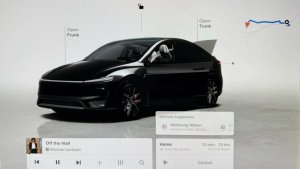
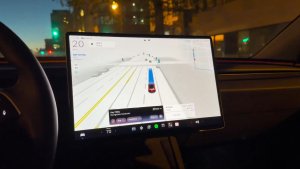
However, with FSD v14.3, the behavior has been completely changed. The initial prompts asking the driver to pay attention remain the same. However, if those warnings are ignored, the UI now displays a new message: "FSD (Supervised) unavailable. Pulling over soon." While this message is active, the car continues to navigate with FSD enabled; it’ll speed up, stop, or do whatever it needs to, while the vehicle looks for a safe spot to pull over.
Once a spot is found, the message on screen changes to “Pulling over - Take over to drive manually.” Once the vehicle pulls over, it turns on its hazards and puts it into park, with a message that says "Take over to drive manually." The similar strike dialog also appears on screen, letting you know you received an FSD strike.
Update: It looks like this was introduced in FSD v14.2.
Video
In this video, you can see the moment FSD starts asking for the driver’s attention, to when it decides to pull over, looks for a spot and then puts the vehicle into park.
Changes to the Strike System
This update also brings a major change to how Tesla handles "strikes." Historically, if you were locked out of FSD for inattentiveness, FSD was suspended for the remainder of the drive. You would have to stop, put the car in park, and get out of the car for the system to reset. With v14.3, that frustration is largely gone.
While the system will still issue a strike and display the updated strike count once the car has safely parked, it now allows the driver to simply put the car back in drive and immediately re-enable FSD. This change makes the system feel much more like a helpful assistant.
These changes are likely due to improvements in FSD v14.3.2, which unified the AI models for consumer FSD, Tesla’s Robotaxi platform, and Actually Smart Summon (ASS), providing a more confident and smoother driving experience. Pulling out of an active traffic lane and into a safe parking spot is likely a maneuver that trickled down from Tesla’s Robotaxi builds to FSD.
Robotaxi Future
The ability for a car to pull itself over safely is a requirement for Tesla’s autonomous future. As the company expands its Robotaxi service, the software must be able to handle a variety of "edge cases." These small, undocumented refinements in v14.3 are likely a preview of the even more advanced logic coming with version 15, which Elon Musk has teased will feature a model with 10 times as many parameters (around 10 billion).
Tesla’s push for software dominance is paying off, with the company recently hitting $546 million in annual recurring revenue from its FSD subscriber base. Along with the new pull-over logic, v14.3 continues to iterate on the new FSD feedback menu, making it smaller and less intrusive for drivers.