Tesla is taking a fresh stab at solving peak-hour congestion at its busiest charging hubs, though the first real-world trial shows the system still needs a bit of polishing. Following an announcement by the official Tesla Charging account on X, a new virtual waitlist feature entered public beta testing last week across five high-traffic locations in the U.S., including sites in California and New York.
While Tesla has been testing the feature internally since last summer, its public debut provides the first unfiltered look at how virtual queuing handles the chaos of a busy parking lot. Long-time community member Meriam Al Sultan (@AlSultan_Meriam) recently put the system to the test at the Saratoga Avenue Supercharger in San Jose, revealing an experience that delivers excellent software integration but struggles heavily with human behavior.
How the Virtual Queue Works On-Screen
Tesla’s implementation relies entirely on software rather than physical barriers or painted lane lines. The system is designed to trigger automatically when a vehicle navigates to a completely full station, prompting a subtle notification in the status bar on the main display.


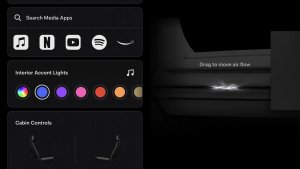
"We waited until all stalls got filled, then a pop up showed in our cars asking to join a waitlist, it may get easily dismissed because it shows up on top where the time is," Al Sultan reported. Once joined, your position in line and estimated wait time are displayed directly in the status bar of the center screen. Tesla is also leveraging the bottom-left area of the screen, where tooltips usually recommend using Tesla Theater at Superchargers or display system notifications for things like unbuckled seat belts.
The integration with iOS is particularly slick, making use of a Live Activity widget on the iPhone lock screen to show exactly how many cars are ahead of you. When a stall eventually opens up, drivers are granted a 3-minute countdown timer to claim the spot, complete with the app pushing a notification to their phone and an on-screen button to add 30 seconds if they need a little more time to maneuver into the stall.


The Line-Cutting Problem
The biggest flaw in the current public beta is that Tesla’s software has no physical way to enforce the digital line. As we pointed out in our recent Tesla app version 4.56.0 breakdown, the charging network does not actually reserve a spot for you with a VIN allow-list or block unauthorized vehicles from plugging in and drawing power.
During Al Sultan’s experiment, multiple drivers who were completely unaware of the digital queue simply pulled into open spots as soon as they became available. "At least 8 people cut in line and we don’t think they knew about the waitlist, maybe the design should show that other people are waiting before it invites them to join," Al Sultan noted.
When a stall becomes available, it gives us 3 minutes to go charge before you lose your turn
— Meriam Al Sultan سا(حرة) 🪄 (@AlSultan_Meriam) May 15, 2026
Also an option to leave the waitlist.
So when a stall opened up Nik immediately started driving
But someone cut in line who probably didn’t know, and then another stall opened up, but… pic.twitter.com/Vx1iOul9oz
When an unlisted vehicle snatches a spot, the system doesn't flag any wrongdoing or warn the offending driver. Instead, the person who patiently waited their turn on the digital list is simply bounced back into the virtual queue. Al Sultan explained that instead of utilizing empty parking spaces and waiting for an app alert, drivers instinctively formed a physical line in the driveway, creating a traffic bottleneck.
We then tried to find a good spot to wait without blocking traffic, no one noticed me and people started lining up way behind me and kinda blocking traffic rather than joining the waitlist and parking correctly in the parking lot.
— Meriam Al Sultan سا(حرة) 🪄 (@AlSultan_Meriam) May 15, 2026
I drove to go line up with them and they did… pic.twitter.com/MFYFfud3Qb
Managing a Massive Charging Network
Congestion management is becoming an absolute priority for a network that now facilitates more than 50 million charging sessions every single quarter. While Tesla recently celebrated hitting 80,000 stalls worldwide, physical expansion cannot entirely erase holiday or rush-hour spikes.
To combat this, the engineering team has also developed an AI-powered Supercharger forecasting algorithm to predict congestion patterns before drivers arrive. However, when a site is completely maxed out, a virtual queue is the only logical solution. Al Sultan suggested clear physical signage at test sites, advising drivers to park normally and join the app queue rather than blocking traffic lanes.

This public beta is acting exactly as a beta should, exposing the gap between elegant UI design and real-world human habits. Because Tesla historically iterates on software at a rapid pace, we can expect the charging team to quickly update the interface with prominent warning screens for non-queued drivers and more. We’d also like to see Tesla reserve Supercharger stalls for queued vehicles and/or prevent others from cutting in line. For now, if you find yourself charging at one of the five pilot sites, keep an eye on your status bar — and an even closer eye on the drivers around you.