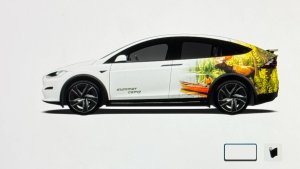
When Tesla officially retired the Model S and Model X, many assumed it was a sudden decision based on declining sales. However, during a recent episode of the Ride the Lightning podcast, Tesla's Chief Designer, Franz von Holzhausen, and Vice President of Engineering, Lars Moravy, set the record straight.
The executives revealed that the decision to sunset the flagship vehicles was actually made over a year and a half ago. The choice was driven not by popularity, but by a combination of aging safety architecture and a desperate need for new manufacturing space.
The Aging Safety Architecture
The Model S platform was originally designed in 2008 and launched in 2012. While Tesla continuously upgraded the vehicle over its 14-year lifespan, the fundamental physical architecture eventually reached its limits, specifically regarding crash safety testing.
Moravy explained that major safety organizations like Euro NCAP and the IIHS consistently update their protocols to become more stringent. While Tesla was able to implement structural band-aids along the way to pass tests like the small-overlap and offset-crash tests, keeping the aging platform at a five-star safety rating was becoming increasingly difficult.
"We want to make the safest cars on the road, and that means always making structural updates," Moravy stated. Ultimately, bringing the 2012-era architecture fully up to speed with future safety protocols would have required a massive, hundreds-of-million-dollar overhaul.
Perfect Timing for Optimus
At the exact time the engineering team was evaluating this massive financial hurdle, Tesla was facing a physical space constraint. Tesla needed to secure a pilot factory to begin manufacturing Optimus.
Rather than spending millions to completely tear down and redesign the Model S and Model X manufacturing lines in Fremont, an executive suggested using that massive footprint for Optimus instead.
"We got to spend however many hundreds of millions of dollars to redo this in this factory, but we also need a pilot factory for Optimus," Moravy recalled. "And it just kind of was serendipitous. I think that the two things went hand in hand".
The Future is Autonomous
Beyond the physical limitations of the platform and the factory, the decision also came down to Tesla's ultimate corporate vision. The company is aggressively pivoting toward a fully autonomous future, heavily prioritizing the upcoming Robotaxi Network and Optimus.
Because the Model S and Model X were the very first cars Tesla ever designed, they are fundamentally the least ready for a driverless world, according to Tesla. Sunsetting the vehicles allows the company to move forward and focus entirely on next-generation architectures designed specifically for autonomy.
New Model S/X or CyberSUV?
Despite the bittersweet ending, the executives proudly reflected on the total impact of the flagship vehicles. During their monumental production run, Tesla successfully delivered a combined 755,000 units, consisting of over 400,000 Model S sedans and over 300,000 Model X SUVs.
For those who love the S and X and hope to see another roll off a production line in the future, all hope might not be lost. Moravy had one last thing to say about it.
Now is not the right time to keep this one going, doesn’t mean it goes away forever, never say never.
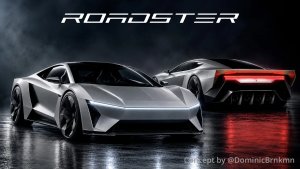
The Model S and X were never meant to be volume sellers, and they need to be completely redone to bring costs down. There is certainly room in Tesla’s lineup for a larger SUV, as hinted at by Tesla teasing a Cyber SUV. Unfortunately, the S/X had to come to an end, but Tesla may just be preparing for the next-generation, all-new, larger models.
You can watch the full episode below: