Tesla owners have successfully achieved what was once considered the holy grail of autonomous driving validation in North America. A group of dedicated electric vehicle enthusiasts has officially completed the world’s first continuous, coast-to-coast autonomous journey across Canada, traversing the entire country without requiring a single human correction.
The milestone was shared by participant David Moss (@DavidMoss) on X, who announced that the team had successfully finalized the cross-country validation run. The vehicle departed from the Horseshoe Bay Terminal in Vancouver, British Columbia, and arrived at the official Tesla Showroom in Halifax, Nova Scotia, exactly 4 days and 21 hours later. The massive cross-country trek covered 3,760 miles (6,051 km) of highly diverse Canadian roadways.
Zero Disengagements Across Six Thousand Kilometers
What makes this specific road trip a landmark moment for automotive tech is the strict definition of its execution. According to Moss, the entire journey was completed with absolutely zero disengagements or human interventions of any kind. Tesla AI chief Ashok Elluswamy even acknowledged the feat, congratulating and thanking Moss and co. for their efforts.
The vehicle managed the complex logistical navigation of merging onto high-speed interstates, adjusting to variable weather conditions, and handling complex construction zones autonomously. Remarkably, the software even managed the end-to-end parking logistics at every stop, automatically steering, aligning, and backing the vehicle perfectly into available stalls at various Tesla Superchargers along the route without the drivers ever touching the wheel or pedals.
Powered by the Spring Firmware Stack
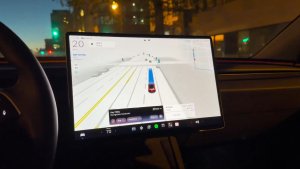
The cross-country journey was powered entirely by Tesla's newly deployed Full Self-Driving (FSD) V14.3.3, which started rolling out earlier this month with software update 2026.14.6.6. FSD V14.3.3 successfully merged the highly anticipated Spring 2026 Software Update features straight into the autonomy branch of the company’s firmware stack.
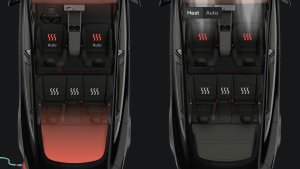
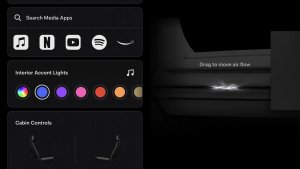
Beyond improving underlying path-planning neural networks, the V14.3.3 build has been highly praised for its UI and interior cabin updates. Specifically, the software relaxes driver monitoring variables with FSD V14.3.3, reducing the frequency of steering wheel torque reminders and visual gaze prompts. This adjustment delivers a more relaxed, chauffeur-like experience that likely added to driver comfort during the grueling five-day trans-Canadian run.
An Unprecedented Track Record for Autonomy
While a continuous zero-intervention drive across Canada is a fresh milestone, Moss has been systematically stacking up records on the platform all year. Earlier this spring, Moss made headlines after completing an intensive 2,700-mile coast-to-coast FSD trip with zero interventions across the United States, proving the system could navigate from Los Angeles to South Carolina entirely on its own.
Furthermore, his vehicle serves as a primary benchmark for long-term fleet consistency, as Moss previously celebrated reaching almost 13,000 miles of intervention-free FSD driving on version 14.2.
While Full Self-Driving (Supervised) officially remains a Level 2 driver-assist suite that technically requires active human supervision, these multi-thousand-mile, community-validated road trips prove that the software maturity is closing in on a near-perfect statistical safety profile, signaling a bright future for unsupervised public transport.