Tesla is marching toward its goal of global vehicle autonomy, slowly but surely rolling out its advanced driver assistance features across multiple international markets. What started as an exclusive, experimental software trial in the United States has quickly expanded into a worldwide deployment. By systematically checking off regional regulatory requirements, Tesla is turning its neural network framework into a scalable solution.
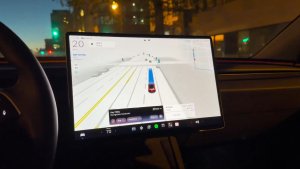
FSD now allows a Tesla to navigate complex city streets, handle busy intersections, execute protected or unprotected turns, and manage high-speed lane changes on its own. It accomplishes this by leveraging an end-to-end neural network trained on more than 10 billion miles of real-world driving data. FSD even serves as the foundation of Tesla’s autonomous Robotaxi service.
The latest iteration of the software at the time of writing is version 14.3.3, which started rolling out earlier this month, delivering a smoother, more refined experience with reduced driver monitoring.

As Tesla continues to expand FSD availability, the hardware limitations and launch conditions vary by territory. Let's take an intensive, market-by-market look at the current state of Tesla's global autonomous footprint.
United States
The U.S. serves as the testbed and epicenter of Tesla's autonomous development. The original FSD Beta officially launched to its first private consumer testers back in October 2020, running on Hardware 3 (HW3). Today, the U.S. remains the first market in the world to receive the latest FSD software iterations.
While the software continues to support millions of older legacy vehicles, the most advanced neural network builds and newest features now only roll out to more modern vehicles with Hardware 4 (AI4).
Canada
Canada was the first international expansion territory for the driver assist program, officially introducing FSD in March 2022 on HW3-equipped vehicles. Because Canadian vehicles have to deal with intense winter conditions, more country roads, and unique regional traffic habits, the market has provided invaluable real-world training data for Tesla’s neural networks. Today, the Canadian market enjoys software parity with the United States, meaning new feature sets roll out across North America almost simultaneously.
Mexico
Tesla officially extended its North American autonomy footprint to Mexico in February 2025. Unlike the multi-year public beta testing model utilized in the U.S. and Canada, the over-the-air update was exclusively distributed to AI4/HW4-equipped Teslas at launch. Restricting initial deployment to the latest computer suite allowed the system to navigate complex urban roads and traffic patterns with more finesse.
Puerto Rico
Puerto Rico is effectively part of Tesla's unified North American market for software distribution. FSD officially launched on the island in February 2025, alongside Mexico. Mirroring the deployment strategy utilized in Mexico, the software first launched on HW4 vehicles to ensure peak performance.
China
FSD’s expansion into China has been one of Tesla’s most complex regulatory challenges. Tesla initiated a limited rollout of FSD on HW4 vehicles in China in February 2025, subsequently shipping the feature to employees' HW3 cars in March 2025 for closed internal testing. However, local data security laws halted a broader public release for either hardware configuration.
To overcome this, Tesla is working to relaunch FSD in China with a local data center it built within Chinese borders earlier this year, ensuring all vehicle telemetry is processed locally. With data compliance resolved, the automaker is gearing up to bring FSD V14 to China under a new name, potentially unlocking a massive subscriber base.
Australia
The software officially made its way across the Southern Hemisphere in September 2025, launching on HW4 vehicles throughout Australia and navigating on the left side of the road for the first time. There is currently no official word on when the software will expand to the local HW3 fleet.

New Zealand
Launching in tandem with Australia in September 2025, New Zealand drivers received access to FSD exclusively on HW4 hardware. According to feedback from local users, the system has adapted well to the country's unique rural highway layouts and terrains.
South Korea
South Korea granted its formal deployment approval in November 2025 for local HW4 vehicles. The launch marked a major milestone, as South Korea became the first market outside of North America to receive FSD V14, while other markets were receiving FSD v13.
The Netherlands
The Netherlands has become the European gateway for FSD. In April 2026, the Dutch Road Traffic Authority (RDW) granted a landmark type-approval for the Level 2 system, allowing Tesla to immediately launch FSD on local HW4 vehicles. The deployment introduced unique European UI changes and features tailored for the region. This milestone established a template legal and regulatory framework for the entire European Union.
Lithuania
Leveraging the Dutch RDW’s validation of FSD, Lithuania became the second European Union nation to officially adopt the system, approving over-the-air updates to local HW4 vehicles earlier this month.

Estonia
Estonia is the latest international territory to approve FSD, officially green-lighting it earlier this week. Local transport authorities accepted the existing Dutch type-approval, with an over-the-air software rollout expected to begin soon for HW4 vehicles.
Global Availability Summary
To visualize how FSD’s footprint has expanded globally, here’s a table that tracks the launch history for each market:
Region / Market | Official Launch Date | Hardware Supported at Launch |
|---|---|---|
United States | October 2020 | Hardware 3 (HW3) |
Canada | March 2022 | Hardware 3 (HW3) |
Mexico | February 2025 | Hardware 4 / AI4 |
Puerto Rico | February 2025 | Hardware 4 / AI4 |
China | February 2025 (Limited) | Hardware 4 / AI4 |
Australia | September 2025 | Hardware 4 / AI4 |
New Zealand | September 2025 | Hardware 4 / AI4 |
South Korea | November 2025 | Hardware 4 / AI4 |
The Netherlands | April 2026 | Hardware 4 / AI4 |
Lithuania | May 2026 | Hardware 4 / AI4 |
Estonia | May 2026 (Pending Rollout) | Hardware 4 / AI4 |
Upcoming Markets on the Horizon
The Dutch RDW’s landmark type-approval has triggered a legislative wave across Europe, with several markets inside and outside the EU expected to activate the software next:
More EU Nations: The regulatory domino effect is accelerating across Europe. Notably, Belgium has been moving to fast-track Tesla FSD approval, while Sweden has expanded public FSD testing on local roads. The remaining Baltic nation of Latvia is also rumored to be closing in on an administrative sign-off, and Tesla remains actively engaged in talks for FSD approval in Ireland.
Israel: Passionate local owners previously organized a petition for FSD approval, which has caught the attention of local leadership. The country’s Minister of Transport, Miri Regev, recently teased that Tesla FSD is coming soon to Israel.
United Arab Emirates: Middle Eastern testing is well underway, with Tesla FSD officially beginning road testing in the UAE earlier this year to acclimate its neural network to the heat haze and desert conditions.
Japan: Earlier this spring, Tesla officially announced that it aims to launch FSD in Japan this year, targeting a release before year-end.
Countries like the United Kingdom, Saudi Arabia, and Brazil remain candidates-to-watch for subsequent expansion waves as well.

Hope for Legacy Hardware Owners
As Tesla pushes its vision-first stack into these new territories, owners of older vehicles have understandably expressed concern about being left out of the autonomous loop. Because the vast majority of international launches are restricted to AI4/HW4 vehicles, a significant portion of the global fleet remains locked out of the software even in regions that have already approved it for public use.
However, an impending update may remedy that soon. Tesla is working on FSD V14 Lite, an optimized, distilled version of the main software branch that is expected to retain the same features and functionality while operating within the lower compute constraints of older HW3 CPUs.
According to Tesla, FSD V14 Lite for HW3 vehicles is on track to debut later this summer. The company has already confirmed that FSD V14 Lite will expand internationally following validation. This upcoming release could finally provide legacy HW3 owners outside of North America with a path to experience autonomous driving, ensuring that Tesla's global scaling efforts remain inclusive of its early adopter community.