A harrowing accident in California has once again highlighted the structural integrity and safety engineering of Tesla vehicles. Last Friday morning, a Tesla Model 3 carrying two passengers plunged 300 feet down a steep cliffside on Mulholland Highway in Malibu.
The incident triggered an intensive multi-agency rescue response, but despite the extreme drop, both occupants managed to survive.
A Dramatic Cliffside Rescue
According to reports from Malibu Search and Rescue, the accident occurred around 7:30 a.m. after the driver veered off the road. When emergency crews arrived at the scene, the male driver had managed to get out of the vehicle and was yelling for help from the hillside. A female passenger remained pinned inside the cabin.
To reach the wreckage, rescue workers had to rappel down the steep 300-foot cliffside. Emergency personnel successfully extracted the passenger, and both individuals were airlifted by helicopter to a nearby trauma center. Fortunately, authorities confirmed that the occupants sustained non-life-threatening, moderate injuries — a remarkable outcome considering the scale of the fall.
Real-World Proof of Safety Engineering
This survival story adds to the vehicle's long-standing reputation for passenger protection. The Model 3 has a documented history of being one of the safest vehicles on the road, winning the Insurance Institute for Highway Safety (IIHS)’s Top Safety Pick+ award for three years running starting in 2020. There have been several real-world instances of the vehicle sustaining massive impacts while shielding occupants from fatal injuries, including a past incident where a Model 3 successfully protected its passengers after a large tree collapsed directly onto its roof.

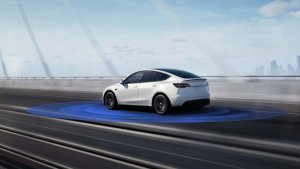
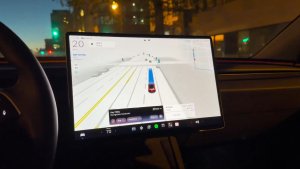
While structural design is critical when a crash occurs, active crash prevention remains the primary focus for Tesla's engineering team. Incidents like this make a strong case for utilizing Tesla's Full Self-Driving (Supervised) system, especially on challenging stretches of highway where the technology has already proved its proficiency. The advanced driver assistance system boasts a significantly lower ratio of accidents per million miles driven compared to traditional human drivers. Tesla also maintains that FSD V14, the latest iteration of the software, is already safer than an average human behind the wheel.
As Tesla continues to refine its active safety features and driver assistance suites, real-world wrecks like the Malibu drop serve as a vivid reminder of why the automaker consistently tops automotive crash test ratings. It shows that Tesla’s vehicles can handle unpredictable, real-world physics so well that even when human error causes a major departure from the roadway, passengers are given the highest possible chance of walking away.