The commercialization of autonomous driving systems like Robotaxi, Waymo, and Zoox is routinely judged not on their merits, but instead in the court of public opinion. The one factor that sways these opinions is incident frequency.
Any collision involving an autonomous vehicle introduces skepticism for the general public. In fact, a recently published Fox News article about an incident involving a Waymo used an image of a Tesla Robotaxi instead.
But the telemetry from regulatory filings tells a different story of just how successful Tesla has been with safety.
The Data At Hand
An examination of the raw incident logs since the last update in mid-April highlights a divergence in event volume across the three major autonomy operators in the United States: Tesla, Waymo, and Zoox. The data specifically tracks severe incidents, which result in physical injury or significant property damage.
Operator | Incidents Recorded | Cumulative Historical Fleet |
Tesla | +1 | 18 (Austin Operational Envelope Only) |
Zoox | +6 | 139 |
Waymo | +191 | 2,009 |
Notably, this data is not normalized by the total number of vehicles in the fleet or the miles traveled, which means it cannot and should not be taken at face value (Waymo logs far more mileage and has a larger operational fleet than Tesla, for now).
What is key here is the singular incident that Tesla has recorded between April 15th and June 16th.
The Zero-Fault Incident
The solitary incident logged by Tesla occurred within the Austin, Texas, geofence and serves as a textbook example of just how safe Robotaxis are and how unsafe humans can be.
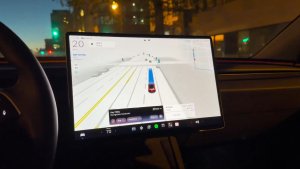
According to the official accident report, the Robotaxi was executing a standard, run-of-the-mill navigation sequence. The vehicle was stationary in traffic, positioned correctly in a designated left-turn-only lane, and obeying a solid red left-arrow traffic control signal.
Real-world telemetry notes that a human-operated pickup truck approached the rear of the stationary Tesla and initially brought the vehicle to a complete stop behind the autonomous vehicle.
Moments later, due to a lapse in situational awareness or premature input, the pickup truck driver proceeded forward, rear-ending the stationary Tesla. At the time of the impact, the Tesla was occupied by a safety monitor and had no commercial passengers on board.
For all intents and purposes, this incident was entirely caused by human hands, with no input from FSD.
Predictability is Hard
The incident in Austin illustrates a rather odd challenge that has confronted the AI teams leading the charge on true Level 4 Autonomy: predictability. Autonomous neural networks are trained to be compliant with statutory traffic laws. They do not cheat stop lines; they do not inch forward to anticipate a light changing; and most importantly, they cannot be distracted.
Human drivers, conversely, rely heavily on informal, often illegal behavioral shorthand to navigate urban environments. When a compliant autonomous vehicle interacts with a distracted human operator, the human element becomes the vector for collision.