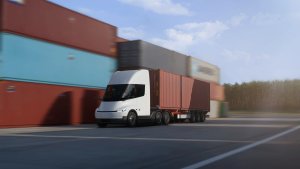
Tesla appears to be making some serious moves behind the scenes to bring autonomous driving to the world of heavy freight. The new, refreshed Tesla Semi was just spotted rolling around public roads rigged up with some very familiar-looking gear. It looks like the team is officially gathering the ground truthing data needed to train Full Self-Driving (Supervised) for the big rig.
The sighting comes courtesy of a video posted by @teslaownersSV on X. The post pointed out that the new truck was seen driving near Tesla’s factory in Fremont, California, with its "roof loaded with ground truth validation equipment." This roof-mounted framework is pretty similar to the type of validation hardware we’ve seen strapped to passenger models right before Tesla enables its FSD software on them. The X post also highlighted the presence of washers for the new Semi’s expansive array of cameras.
Caught the new Tesla Semi testing in Fremont today — roof loaded with ground truth validation equipment, full camera suite with washers, and it’s already ‘autonomy ready.’
— Tesla Owners Silicon Valley (@teslaownersSV) June 27, 2026
The future of freight is getting closer! 🔥🚛 pic.twitter.com/UjDkAA1nLl
Built for Autonomy
When Tesla unveiled its new Class 8 electric truck design last fall, it came stamped with an autonomy-ready promise. It features 10 external cameras alongside an internal cabin camera. Right now, those sensors handle standard safety features like automatic emergency braking and lane-keep assist, but this newly spotted validation rig indicates that a full rollout of FSD (Supervised) is actively being worked on.
As customer deliveries continue to scale up out of Tesla’s dedicated Semi factory in Nevada, here’s a quick refresher on how the two available configurations stack up (check out our full breakdown of the Tesla Semi’s specs to learn more):
Spec | Standard Range | Long Range |
|---|---|---|
Range | ~325 mi | ~500 mi |
Energy Consumption | 1.7 kWh/mi | 1.7 kWh/mi |
Fast Charging | Supported, up to 60% in 30 minutes | Supported, up to 60% in 30 minutes |
Charge Type | MCS 3.2 (up to 1.2 MW) | MCS 3.2 (up to 1.2 MW) |
Powertrain | Tri-motor | Tri-motor |
Power Output | Up to 800kW | Up to 800kW |
Curb Weight | < 20,000 lbs | 23,000 lbs |
ePTO | Up to 25kW | Up to 25kW |


A New Cabin Experience
Tesla’s new Semi introduces a variety of localized improvements designed directly around feedback from real-world logistics operations. The interior layout centers the driver with two massive 16-inch touchscreens, integrated wireless phone chargers, and relocated cup holders that are much easier to reach during long shifts. Tesla even reworked the side windows from the previous generation so drivers can now easily reach outside the cabin when interacting with guard shacks or checking mirrors.


In terms of road performance, the Semi fares much better than the competition on low-friction surfaces like icy roads thanks to its Vehicle Dynamics Control (VDC) software, which prevents jackknifing.
While there is no official timeline for when the Tesla Semi will officially receive FSD, seeing active validation vehicles on public roads is a major milestone. Teaching the neural networks to handle a vehicle weighing up to 82,000 lbs takes a lot of training, but the foundation is clearly being laid right now.