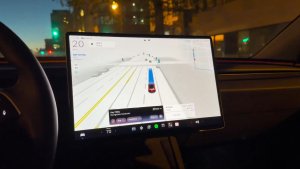
Tesla started rolling out Full Self-Driving (Supervised) v14 Lite to early access testers with older Hardware 3 (HW3/AI3) vehicles in the U.S. this week with software update 2026.20.5.1. However, that has left HW3 owners outside the U.S. wondering if they’re going to get skipped.
Well, global HW3 owners can breathe a sigh of relief, because that’s not going to happen. Tesla confirmed back in April that FSD v14 Lite would eventually roll out internationally. "Following future rollout of FSD V14 Lite for HW3 vehicles in the US, we plan on expanding V14 Lite to additional international markets," the official @Tesla account said on X at the time. With FSD v14 Lite now entering the public validation phase, the focus shifts to when it will become available outside the U.S.
The FSD V14 Lite Roadmap
This is the first FSD update for legacy HW3 vehicles in roughly 14 months. FSD v14 Lite is a distilled build that packages the same capabilities as and nearly the entire feature suite of the main v14 branch into a model that the memory-constrained AI3 computers can run. With AI3 hardware having just 15% of the memory bandwidth of AI4, compressing FSD v14 to the point that it can function on these older vehicles is a massive achievement. Initial feedback from FSD v14 Lite testers shows a massive leap in overall smoothness, performance, and decision-making.

Bringing FSD v14 Lite overseas will not happen overnight, however. "Since international rollout is subject to several factors (completion of technical verification, regional adaptation & relevant regulatory approvals), we can't provide definitive dates at the moment, but will provide updates on a rolling basis," Tesla previously noted. In most overseas markets, Tesla only applied for regulatory approval on newer AI4 hardware, completely leaving older HW3 computers out of the initial paperwork. For more details, check our comprehensive history of FSD's global expansion.
Canada and Other North American Markets
Canada is a prime candidate for FSD v14 Lite's first international expansion since it is one of the only two countries outside the U.S. to ever have FSD approved for HW3 vehicles. Neighboring regions in the North American cluster, like Mexico and Puerto Rico, will likely have to wait a little bit longer for localized optimization to finish.
Europe
At the time of writing, five European countries have already approved FSD (Supervised) for local roads:
The Netherlands
Lithuania
Estonia
Denmark
Belgium
With these countries jumping straight onto FSD v14 and European HW3 owners already organizing a collective action against Tesla for leaving them out of the rollout, Tesla might prioritize bringing FSD v14 Lite to the EU.
China
While Tesla did roll out FSD to some HW3 and HW4 vehicles in China last year, a wider release has since been stalled by local data laws. Tesla is currently working to relaunch FSD in the region, this time with FSD v14 and reportedly under a new name.
South Korea
South Korea was the very first market outside North America to get FSD v14. Given that the country contains an active fleet of roughly 50,000 HW3 vehicles, it's a primary target for the FSD v14 Lite’s international expansion.
Oceania
Australia and New Zealand just started getting FSD v14 earlier this month. The deployment even skipped specific vehicle models due to ongoing validation, so it might be a while before FSD v14 Lite makes its way down under.
The Future of HW3
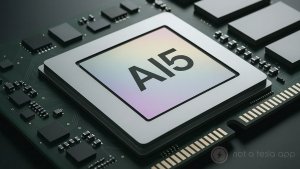
With Tesla releasing FSD v14 Lite without any specific version numbers, it doesn't look like the distilled software will get any point releases or minor updates. Tesla has also already confirmed that FSD v15, the next big leap in its autonomy suite, will only be available for AI4 and AI5 vehicles, so there won't be an "FSD v15 Lite."
According to Tesla, older vehicles simply won’t be able to achieve true autonomy with HW3 computers. Instead, FSD v14 Lite will act as a stopgap measure to keep HW3 vehicles running modern features until Tesla can provide physical hardware retrofits that will truly make these older cars capable of unsupervised autonomy. Any future computer swaps will likely feature next-generation AI4+ or AI5 chips, but owners shouldn’t expect these upgrades until late 2027 at the earliest.