Tesla is quickly scaling Cybercab mass production, which kicked off in April at Gigafactory Texas. While recent EPA filings gave us a detailed look at some of the purpose-built robotaxi's specs, Tesla just published an official document that fills in a massive number of blanks.
Tesla's new Cybercab First Responder Interaction Plan gives emergency personnel a clear blueprint on how to handle the vehicle during public operations. Because the vehicle operates completely on its own, the document details exactly how the robotaxi behaves, how to shut it down, and reveals several unannounced hardware features. Throughout the manual, Tesla officially refers to the vehicle as the "Cybercab Robotaxi" and explicitly defines its 'Autonomous Mode' as an SAE Level 4 self-driving system.
Battery Configuration
The document details the vehicle's dual-battery setup. Like the Cybertruck, the Cybercab uses a 48-volt low-voltage lithium-ion battery to power its onboard electronics and computers. Consumer Teslas like the Model Y, in comparison, utilize a 12-to-16-volt architecture, so the carryover of the 48-volt system from the Cybertruck shows Tesla is serious about reducing wiring weight across its next-gen lineup.

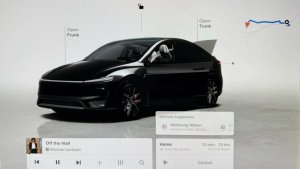
For the powertrain, the vehicle features a 400-volt lithium-ion high-voltage battery pack. Some industry watchers expected the Cybercab to inherit the Cybertruck's 800-volt framework, but Tesla stuck with the 400-volt setup used on its existing high-volume cars. Electronic diagrams included in the documentation also reveal that the production Cybercab skips wireless phone charging hardware. Instead, passengers will need to plug their devices into USB-C ports located directly below the central touchscreen.
Emergency De-Powering
The manual notes that first responders can still move the Cybercab manually using onboard vehicle controls if it gets stuck in a dangerous spot. However, first responders also need a foolproof way to disable a driverless vehicle in an emergency.


Tesla built in physical redundancies by including two separate First Responder Loops. Cutting and removing a section of either loop cuts power to the entire vehicle, though full de-powering can take up to two minutes. The primary loop is under the hood, while a backup loop sits behind two steel panels underneath the B-pillar applique.
External Microphones
Tesla also added external microphones to the B-pillars for the first time on any of its vehicles, alongside loudspeakers built into the bottom of the chassis. These allow passengers or emergency workers to talk directly with remote Robotaxi Support staff without opening the doors. The Cybercab also features an Active Hood system that pops up during a pedestrian collision to mitigate injuries.

Built-In Tow Straps


Unlike most of Tesla's vehicles, the Cybercab must be towed with all four tires off the ground. It comes with a dedicated tow strap (and carabiner, in some cases) that you can access by unscrewing and then rotating the front license plate.


Wheel Cover Removal
The Cybercab features gold wheel covers on all four of its wheels. These serve as hubcaps and also extend outward to cover the tires' sidewalls, and they can be removed if needed (to access the lug nuts or the pressure valve, for example).

To remove the Cybercab's wheel covers, simply grip the cover by its flexible outer ring and pull it toward you, doing so around the full circumference of the cap to release all of the retaining clips.
Hidden Details and Safety Systems
The first responder guide notes that the Cybercab packs at least 10 individual airbags to protect occupants. This includes front, knee, curtain, and unique seat-mounted side airbags on both the inner and outer sides of the seats. For safety, the vehicle automatically stops driving and shifts into park the moment a passenger unbuckles their seatbelt or opens a door.
A few miscellaneous mechanical details also made it into the plan. The battery cooling fluid uses a bright orange color to distinguish it from other fluids. Each external camera is serviced by a dedicated washing system backed by pressurized air canisters to keep the lenses clear, especially in bad weather. Finally, if the charge port malfunctions while charging, there is a manual emergency charge cable release hidden away behind the lining of the rear wheel well.
Real-World Robotaxi Operations
Tesla’s Cybercab First Responder Plan outlines exactly how the vehicle navigates the world without a human driver. When it isn't carrying a passenger, the vehicle roams its operating territory, heads to a parking lot, or drives itself to a charging/service station. If the vehicle suffers a hardware failure or loses connectivity at any point, it flashes its hazard lights rapidly and attempts to pull over safely.
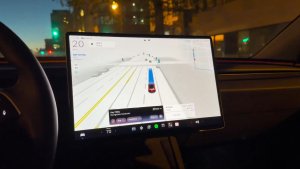
Tesla also noted that the Cybercab is designed to operate on all public roadways, including freeways, highways, city streets, rural roads, and parking lots/garages. It can also manage airport pick-up zones, handle car washes, navigate around traffic cones, and interpret clear hand gestures from emergency personnel. It can drive during the day and at night, and can handle light to moderate rain, fog, and snow.
In addition to publishing the emergency manual, Tesla this week officially started testing production Cybercab units with no steering wheels, pedals, or other manual driving controls on public roads in Austin. The regulatory path to deploying the Cybercab as Tesla wants it is starting to become clearer, too, with NHTSA recently ending its requirement for brake pedals on autonomous vehicles.