Tesla is pulling out all the stops to make sure its purpose-built robotaxi has the absolute best silicon available. While we have known for a bit that the Cybercab is ditching traditional interior hardware, new details suggest Tesla has also given its computing power a massive upgrade compared to the standard consumer vehicle fleet.
According to information from a very reliable source, production units of the upcoming Cybercab are running a more powerful version of Tesla’s Full Self-Driving computer than what you can currently get in a Model 3 or Model Y. With Tesla kicking off Cybercab mass production at Gigafactory Texas back in April, these new details give us a better look at what’s actually running under the hood.
Crushing Memory Bottlenecks With More RAM
The big change with this new driving computer comes down to onboard memory. Our source noted that the new setup packs more RAM than the Hardware 4 (HW4/AI4) computers shipping in consumer vehicles today.


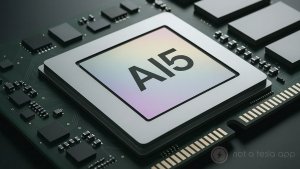
It’s still unclear whether these early Cybercabs are running a pre-production version of the upcoming AI4+ chip announced during the Q1 2026 earnings call earlier this spring, or if the engineering team simply packaged two current-gen AI4 boards into a single configuration. There’s even a slight chance it could be an early version of the AI5 chip, though that processor isn’t expected to enter mass production until sometime in 2027.
To put this memory bump into perspective, Tesla’s AI4 chips each come paired with 16GB of RAM. Since one FSD computer houses two of these chips, it brings the effective total to 32GB of RAM. While the exact memory capacity of the Cybercab computer remains under wraps, we know it beats that 32GB ceiling.

More RAM is a big deal because it allows the FSD computer to run much larger self-driving models. As Tesla improves FSD and works toward full autonomy, its neural networks have been growing larger and larger, causing the development team to run into memory bottlenecks on current consumer vehicles.
With the upcoming AI4+ computer previously announced to feature double the total package memory of standard AI4 — pushing it up to 64GB of RAM — giving the Cybercab a version of this hardware in advance ensures Tesla’s driverless fleet will have plenty of headroom to run next-gen AI models for years to come.
Built for True Level 4 Autonomy
This extra computing muscle makes perfect sense when you look at how these cars are designed to operate. Tesla recently released first responder documentation for the Cybercab, explicitly stating inside that the Cybercab is equipped with an SAE Level 4 ‘Autonomous Mode.’ The Cybercab is designed to operate entirely without human intervention, and we now know that it’s using a beefier computer than Tesla’s current consumer lineup to do so.


Tesla started testing Cybercabs without steering wheels or pedals on public roads in Austin last week. “We plan to deploy Cybercab as the primary vehicle in our Robotaxi fleet. It eliminates the need for a steering wheel, pedals and traditional controls, freeing up cabin space and ultimately reducing weight and operational costs,” Tesla said about the Cybercab in the 2025 annual impact report it released this week (more to come on that — stay tuned).