Tesla is pulling out all the stops to make sure its purpose-built robotaxi knows its exact location at all times. When you’re building a vehicle designed to navigate dense city streets completely on its own, standard consumer-grade location tracking simply won’t cut it. New details indicate that a major hardware upgrade is tucked into the upcoming Cybercab to provide pinpoint location mapping.
According to information received from a reliable source, production units of Tesla's Cybercab are equipped with a more powerful dual GPS configuration. It’s not completely clear yet if this means the vehicle features a dual-band system for locking onto multiple satellite frequencies at once, or if it packs two separate physical GPS units for redundancy and improved triangulation. Either way, the insider confirmed that this updated layout results in much more accurate positioning than what current consumer vehicles can pull off.
Building Redundancy for Level 4 Operations
This high-precision tracking hardware is being deployed to guide autonomous driving capabilities. Tesla recently released some Cybercab documentation that explicitly labels the vehicle as running an SAE Level 4 'Autonomous Mode.' When a machine is handling the entire driving stack without human backup controls, high-precision telemetry is non-negotiable.


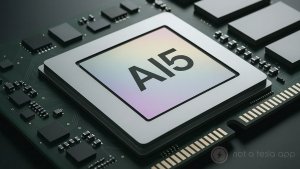
This beefier GPS setup joins a growing list of custom computer upgrades in the Cybercab. We recently learned that the platform also features an unreleased, next-generation FSD computer with more RAM than anything in Tesla’s current lineup.
Adding backup tracking systems is a proven strategy for autonomous fleets. In fact, the “Project Halo” Model Y vehicles currently offering public rides on Tesla’s Robotaxi network also include additional communications and telematics hardware in the rear, located inside what many have taken to calling a "black box" in the rear window. This hardware provides GPS redundancy and improves location tracking, and likely also includes communications equipment to keep the driverless vehicles in touch with remote Robotaxi Support.
Cybercab validation units were previously even spotted cruising through public streets with a Starlink dish strapped to them. While Starlink would offer superior connectivity, and Tesla leadership has already hinted at the robotaxi eventually including it, that's likely still a ways away, and we expect the final implementation to be a lot more elegant.


Moving Fast Toward a Public Reveal
It’s easy to see why satellite redundancy and ultra-precise positioning are top priorities for Tesla. The Cybercab is engineered from the ground up to completely eliminate human inputs, lacking a steering wheel, pedals, or traditional physical controls. The software needs absolute certainty regarding not just the road it’s on but its lane position as well, especially when navigating dense urban canyons or heavily forested roadways where satellite signals easily bounce around.
Tesla is moving toward a public launch of its long-anticipated robotaxi vehicle at an impressive pace. Cybercab mass production started at Gigafactory Texas back in April, and validation teams have spent months gathering real-world data. Just last week, Tesla started testing steering wheel-less Cybercabs in Austin on public streets, bringing the fleet one step closer to its official debut. We might get to see how these high-precision components fare in the wild very soon.