Tesla’s push to deliver unsupervised self-driving across different generations of vehicle hardware is revealing some fascinating software secrets. While consumer vehicles equipped with current-generation Hardware 4 (HW4/AI4) computers handle the bulk of public driving duties today, we’ve learned that the AI model powering them isn't actually the base model Tesla creates.
According to information from one of our sources, the software builds running on HW4 customer cars are actually scaled-down versions of AI models designed for Tesla's next-generation hardware. Tesla is developing FSD for the Cybercab first and is then distilling it down to run on the slightly less powerful HW4 systems found in current production vehicles.
We recently broke the news that the Cybercab includes more powerful FSD hardware than what you can buy on consumer cars today. This extra horsepower gives Tesla a larger sandbox in which it can develop heavier, more complex AI networks that can eventually be streamlined for the rest of the fleet.
What is Distillation?
To understand how this works, it helps to look at how modern artificial intelligence is trained. Building and running a massive neural network inside a moving car requires a ton of processing power and memory. To bridge the gap, Tesla relies on a training method called distillation.
Engineers train massive, complex “teacher” models in data center environments. Once these giant models learn how to handle complex driving tasks, Tesla distills them into smaller “student” models. These student models are optimized to run locally on the computers inside consumer cars, offering similar capabilities without overloading the hardware.

How much distillation is required depends entirely on the target hardware, mainly the memory capacity and bandwidth of the computer. While the Cybercab serves as the ideal hardware setup (for now — Tesla’s engineers may eventually run into a resource ceiling there as well), consumer cars receive optimized, lighter versions.
Comparing the Hardware Gap
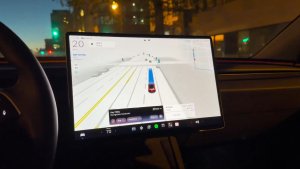
The process is similar to how Tesla created FSD v14 Lite for older Hardware 3 (HW3/AI3) vehicles. The v14 Lite build is a distilled version of the main v14 branch that started making its way to early access testers last month.
As it turns out, the FSD v14 versions we’re running in our vehicles are also distilled models of what’s running natively on the Cybercab. Fortunately, HW4 likely doesn’t require nearly as much optimization as HW3, which according to Tesla only has about 15% of the memory bandwidth of its successor.

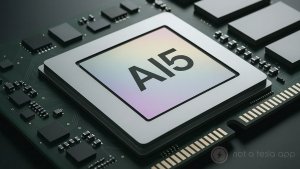
While the exact specifications of the Cybercab’s next-gen processor remain under wraps, we know it features more RAM than HW4, which is critical for AI. As such, we previously speculated that the Cybercab might be running the new AI4+ chips Tesla announced during its Q1 earnings call earlier this year. Those chips are expected to come with 64GB of memory or potentially even more. In addition to a better computer with more memory, the Cybercab also includes dual GPS for more precise location tracking during driverless trips.
Unsupervised Hopes Stay Alive for HW4
This doesn't mean that HW4 won't be capable of unsupervised FSD. While Tesla has previously confirmed that HW3 won't be able to achieve unsupervised autonomy (owners have been promised hardware upgrades that will make their vehicles capable of achieving it), HW4 is still in the running. In fact, this distillation process is good news for HW4 owners — being able to run a version of the software Tesla is developing to power fully driverless, commercial operations on the Cybercab puts HW4 in a good position to achieve true autonomy.
Developing software for the most powerful hardware and distilling it downward lets Tesla utilize the full extent of the Cybercab’s capabilities while keeping customer cars just as capable. It just means the FSD builds running on consumer cars are optimized, lighter versions of Tesla’s more advanced robotaxi software.