Tesla owners are quite used to waking up to software updates that fix minor bugs or add fun new features overnight. However, the U.S. government is stepping in to demand a hardware-level correction for a compliance issue involving a small batch of older vehicles.
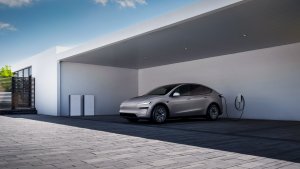
According to a report from Reuters, the National Highway Traffic Safety Administration (NHTSA) has officially denied a petition filed by Tesla back in 2024 to avoid a physical recall. The decision means Tesla will be forced to proceed with an official safety recall covering approximately 19,900 older Model 3 and Model Y vehicles from the 2017 to 2023 model years because their low beam headlights may output light levels that exceed federal regulatory limits.
The Fight Over Blinding Glare
This regulatory back-and-forth began when Tesla tried to convince safety regulators that the extra brightness wasn’t a major issue. In its original petition, Tesla argued that the minor compliance variance was inconsequential to motor vehicle safety and didn’t warrant notifying consumers or mandating a mechanical repair. Tesla also pointed out that it was unaware of any consumer complaints, accidents, or injuries tied to the brighter lamps.
Federal regulators ultimately reached the opposite conclusion. NHTSA formally disagreed with Tesla’s assumption that the marginally excessive headlight intensity doesn’t pose an added risk to surrounding traffic. The agency emphasized that poor weather conditions, like rain, snow, and fog, could cause the noncompliant lamps to create a veiling glare for oncoming motorists or the vehicle operators themselves.

The crackdown lines up with broader public frustration surrounding modern automotive lighting. A consumer survey released by the American Automobile Association (AAA) noted that 6 in 10 drivers identify nighttime glare as a major hazard, with nearly three-quarters of those surveyed stating the issue has steadily worsened over the past ten years as vehicle headlights have gotten better and brighter.

Breaking Tesla’s Over-The-Air Streak
This headlight ruling marks a rare break from Tesla’s usual strategy of pushing software remedies for hardware issues. While the vast majority of safety campaigns involving Tesla vehicles get solved without owners ever leaving their driveways, this hardware noncompliance means affected owners will need to schedule a physical service visit to get their headlight assemblies re-aimed or replaced.
For the Model 3 and Model Y specifically, physical recalls have been uncommon as of late, though Tesla did have to recall nearly 13,000 2025 Model 3s and 2026 Model Ys last year due to potential power loss concerns tied to a physical hardware defect. Instead, the bulk of recent mechanical recalls have targeted the polarizing pickup platform. Tesla recently issued a physical recall for the Cybertruck’s steel wheels, along with some early drive units. There was also the infamous Cybertruck Off-Road Lightbar that was prone to, well, coming off on the road.
Model 3 and Model Y owners affected by this headlamp recall should expect an official notification letter outlining the service timeline over the coming weeks.