Elon Musk has confirmed that Tesla’s FSD software is officially transitioning from a general, one-size-fits-all driving solution to a truly personalized one. Up until now, Tesla vehicles with FSD have mostly behaved in the same manner across the entire fleet. However, in the future, the underlying neural networks will learn directly from your individual habits and remember your preferences.
The revelation comes straight from Musk, who recently addressed a user complaint on X. Tesla FSD user @wholemars posted about a recurring issue where the car unexpectedly leaves carpool lanes, noting that it’s frustrating when FSD decides to exit a carpool lane or express lane, only to get stuck in traffic while everyone else in the far-left lane cruises past. Musk responded to the post, saying: “The car will start to remember your specific interventions and match each person’s individual preferences.”
Upcoming release will remember individual user preferences, so you won’t need to keep correcting your car
— Elon Musk (@elonmusk) July 20, 2026
What to Expect
Human drivers don’t always react the same way to every situation, but up until now, FSD has tried to learn one way of driving. What will likely happen is that FSD will be trained to handle the same situation in different ways.
The most obvious example is parking. Not everyone parks the same way or in the same type of spots. FSD was trained on one way to park, but you could back in, go head first, or pull through. Similarly, you can park in the closest spot near your destination, park further away, park in handicap spaces, leave a gap between cars, or circle the parking lot looking for that perfect spot.
Obviously, not everyone wants the same thing, and what will likely happen is that FSD will now be trained on all of these different types of parking behaviors. Once FSD is trained on multiple behaviors, it can observe and learn how you park and match it to the closest parking model.
This will apply to the most common driving situations, and FSD will be able to match most drivers’ styles.
The car will start to remember your specific interventions and match each person’s individual preferences
— Elon Musk (@elonmusk) July 18, 2026
Managing the Carpool Lane Problem
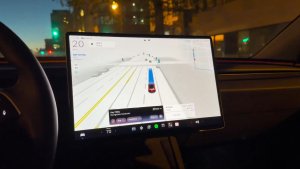
FSD exiting a carpool lane to merge into regular traffic is an issue owners have complained about over the years. Tesla actually has a built-in high-occupancy vehicle (HOV) lane preference toggle in Controls > Navigation > Use HOV Lanes.
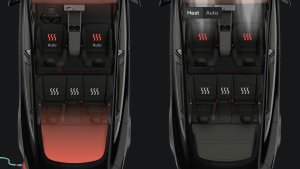
You can also quickly enable or disable this function using standard Tesla voice commands (simply say “Turn on HOV lanes”), but recent updates make it even simpler by splitting this setting into three choices: Auto determines whether you meet time, location, and occupancy rules using cabin cameras; Yes forces the car to enter the lanes whenever they exist; and No blocks them entirely.
By tailoring the software’s decisions to your behavior, if you repeatedly take over the wheel during a similar lane-exit event, FSD can learn from your actions and adjust its behavior in the future.
This development is an extension of Musk recently teasing that future versions of FSD will learn from and mimic your parking preferences, making it so it always pulls into the right spot at everyday locations like your home, office, or kids' school.

Teaching FSD to Learn From Its Mistakes
Tesla recently introduced a (begrudgingly persistent) FSD disengagement menu, which shows up every single time you take over the wheel from the software. The data from this feedback loop might be informing Tesla’s decisions on which kinds of interventions to target for elimination first by teaching FSD to learn from them and avoid them. Parking is by far the most common cause of FSD disengagements, so we expect parking interventions to be the first to improve under these new FSD capabilities that Musk is teasing.

Teaching the car to memorize and repeat your corrections will help eliminate the biggest friction points, especially during parking. If FSD can consistently conquer parking in a home garage (down to the driver’s preferred orientation and spacing) and learn your preferred spot in an apartment complex or parking garage, owner interventions will likely plummet.
Tesla’s internal data shows that FSD is already more energy efficient than humans. Soon, it will be able to learn from their driving preferences and habits as well, further minimizing human input. Musk didn’t share any kind of rollout window for these features, only that they're coming. Tesla is expected to launch the next major branch of its consumer FSD model, version 15, later this year or early next year, with a 10x upgrade in model parameters.