Mass production of Tesla’s purpose-built autonomous vehicle is officially hitting its stride in Austin. After firing up Cybercab assembly lines earlier this spring, the dedicated two-seater robotaxi is now filling up factory lots and staging yards as volume builds up ahead of commercial deployment.
Fresh drone footage captured by Air~wave shows a record batch staging in the outbound logistics lot at Gigafactory Texas. Counting the gold-accented vehicles lined up in neat rows reveals nearly 250 Cybercabs waiting on-site. These finished production units are likely awaiting final software checks or regulatory green lights before heading out to active service zones.

Paving the Way for Commercial Cybercab Rides
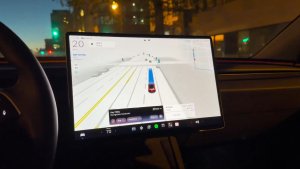
The Cybercab fleet at Giga Texas grows as validation activity speeds up on public roads. Tesla recently started testing steering-wheel-less Cybercabs on public roads in Austin, marking a major milestone for its ambitions of fully driverless operation without pedals or manual backup controls. Before opening the doors to paying customers, however, the Cybercab will first serve internal operations. Tesla has announced that it will soon begin fully autonomous Cybercab rides for employees around the Gigafactory Texas campus.

Once approved for commercial deployment, the custom two-seater will form the bedrock of Tesla’s Robotaxi service, taking over workload from the retrofitted Model Ys currently in use in Austin and other areas. Tesla is now offering Robotaxi rides in seven markets after expanding into Orlando and Tampa this week.
Purpose-Built Architecture and Hardware
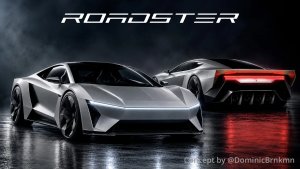
The Cybercab was engineered from the ground up to maximize utility and transport efficiency. Tesla estimates the compact vehicle will achieve a record-breaking efficiency of 6.1 miles per kWh, drastically lowering operating costs compared to consumer passenger models.

The Cybercab will eventually replace most of the Model Ys on the Robotaxi network since it’s so much cheaper to both build and operate. Larger vehicles like the Model Y will remain on the network in smaller numbers to handle groups of more than two passengers or heavy luggage, but the low-cost two-seater will handle standard single and dual-passenger trips.
Underneath the Cybercab’s futuristic shell sits some serious computing power for driverless, unsupervised operation. We recently broke the news that the Cybercab is powered by a next-generation Full Self-Driving (FSD) computer that's more powerful than what Tesla's consumer vehicles currently include. We've also learned that Tesla has started primarily developing self-driving software for the Cybercab, which is then optimized and distilled to create the FSD builds that are rolled out publicly to consumer vehicles. With hundreds of production Cybercabs already parked outside the factory building, the autonomous future is rapidly assembling in Texas.