Personalization has quickly become one of the most entertaining aspects of owning a Tesla. Over the years, the user experience has evolved, and Tesla has added custom vehicle wraps, license plates, and lock sounds, but there’s room for more.
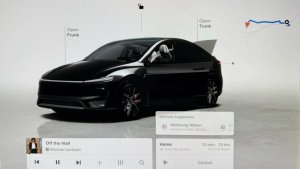
A while back, a post from Alexander Kristensen (@LinkN01) started a conversation around custom user interfaces, with Kristensen sharing a concept render of Tesla UI themes. The concept image shows how themed layouts—such as a neon Cyberpunk aesthetic, a clean minimalist look, or an earthy organic skin—could completely transform the look (and maybe even the functionality) of your Tesla.

Software Customization

Bringing custom themes to vehicle screens is not as far-fetched as it might sound. Hardware-wise, Tesla vehicles are already designed to be tailored, allowing drivers to save seating profiles, favorite apps, and driving dynamics. Extending that level of control to the software interface is a natural next step.
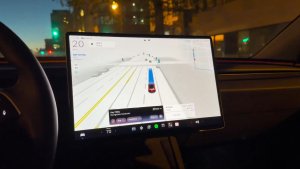
Under the hood, the core infotainment system runs on a heavily customized, Linux-based operating system originally derived from Ubuntu. Many native Tesla apps already rely on web-based technologies. Things like the Dashcam Viewer, music player, FSD Stats, and energy graphs utilize standard HTML, CSS, and JavaScript. Changing the visual appearance of these apps could be as simple as swapping out the underlying CSS stylesheet.

Real-World Uses
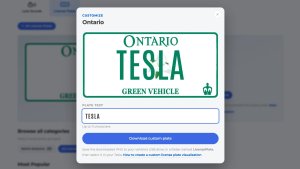
Tesla has already shown a willingness to give owners fun customization tools. Drivers can already customize Tesla lock sounds with custom audio files, or even apply custom wraps and license plates to their vehicle visualization to personalize onscreen car models. Offering full UI themes would take that a step further.
The possibilities for UI skins extend well beyond simple color swaps. For instance, the angular, geometric UI currently exclusive to the Cybertruck could be offered as an opt-in theme across the rest of the fleet, giving Model 3 or Model Y owners access to the futuristic interface.
Functional themes could also offer real-world usability benefits. High-contrast skins could improve screen visibility during bright sunny drives, while accessibility-focused themes could feature larger touch targets and bolder fonts for drivers who want easier menu navigation on the fly.
As software features mature, opening up a theme selector inside the Toybox or Display settings could give owners a whole new way to make the cabin feel like their own.