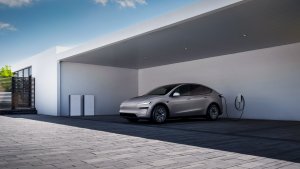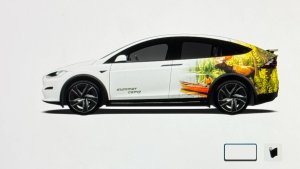
Adding length, weight, and a third row of seats usually nerfs electric vehicle range. However, the extended-wheelbase Model Y L is proving to be an exception on American roads.
In a real-world evaluation conducted by Edmunds on their standardized EV Range Test, the 2027 Tesla Model Y L AWD achieved an official result of 358 miles on a single charge. That performance marks an 11.8% jump over Tesla’s internal 320-mile estimate on the larger 20-inch Uberhelix wheels, making it the longest-range Model Y Edmunds has ever tested.
Tesla officially launched the three-row, six-seat Model Y L in the U.S. last month with customer deliveries slated to begin in September. Potential buyers can already test out the longer-wheelbase variant in person, as Model Y L display vehicles are already hitting showrooms across the country.
How the Model Y L Overcame Its Extra Weight
On the scales, the Model Y L weighed 300 lb more than the Premium (formerly Long Range) All-Wheel-Drive trim. Yet, it outperformed every other Model Y trim currently sold by Tesla:
Tesla Model Y L AWD: 358 miles tested vs. 320 miles estimated (+11.8%, 25.1 kWh/100 mi)
Tesla Model Y RWD: 337 miles tested vs. 321 miles estimated (+5.0%, 22.8 kWh/100 mi)
Tesla Model Y Premium AWD: 327 miles tested vs. 327 miles estimated (0.0%, 26.8 kWh/100 mi)
Tesla Model Y Performance: 293 miles tested vs. 306 miles estimated (-4.2%, 30.8 kWh/100 mi)
A major reason for this surplus is aerodynamics. The extended body achieves a drag coefficient of just 0.216, helped by the new enclosed 20-inch Uberhelix wheels and an integrated rear spoiler. Tesla engineers noted that molding the spoiler directly into the rear hatch instead of bolting it on added 15 miles of driving range to the Model Y L while also raising the third-row brake light to expand rear passenger headroom. To top it all off, the Model Y L borrows a more powerful rear motor from the Model Y Performance, helping it make more power in the first place.

Tesla also increased the Model Y L’s battery capacity to roughly 83 kWh, taking advantage of the stretched wheelbase to fit longer modules.
Cabin Efficiency and Real-World Competition
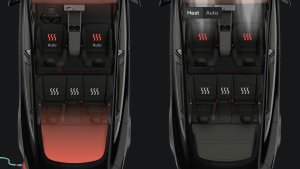
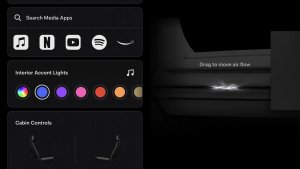
Another factor keeping energy consumption low is improved thermal management. New triple-layer silver coatings on the glass roof reject 30% more solar heat, allowing the HVAC system to cool the interior quicker using less battery power. These updates complement the Model Y L’s advanced climate controls, which bring three temperature zones to a Tesla for the very first time.

While dedicated three-row rivals like the Rivian R1S or Lucid Gravity deliver slightly longer highway distances, they rely on massive battery packs that consume far more energy per mile. The Model Y L, however, is all about efficiency.
By delivering 358 miles of real-world range on a modest battery pack, the Model Y L proves that smart aerodynamics and cabin thermal efficiency can beat raw battery mass.