Real-time road hazard alerts are finally making their way into native vehicle dashboards. Rivian recently confirmed that native Waze alerts are heading to its in-cabin navigation system for R1 and R2 vehicles in an upcoming software update.
Rivian Chief Software Officer Wassym Bensaid announced the integration on X, stating:
“Real-time alerts from Waze are coming to R1 and R2 in-vehicle navigation, starting with speed cameras and police reports in the 2026.31 OTA update. More data and alerts to follow!”
The move immediately caught the attention of Tesla owners, who have spent years requesting Waze functionality on their center touchscreens.
What Tesla Already Offers in Its Navigation
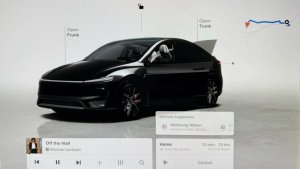
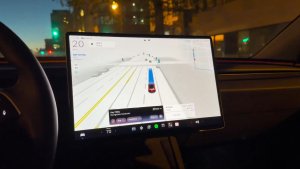
While Tesla has steered clear of supporting third-party apps like Waze, it has quietly built out its own crowdsourced navigation features over time.
Back in 2023, Tesla added speed camera and construction icons, showing visual warnings on the map for speed traps, red light cameras, and active road work. Check out our in-depth look at Tesla’s map icons to learn more about the visual markers Tesla uses to alert drivers along their route.

These features were only available in select regions at launch, depending on data availability. However, recent software releases like the Summer 2026 feature drop have expanded these road alerts to even more regions.
Accessing this routing data requires drivers to enable Online Routing under Navigation in their vehicle’s Settings, alongside an active Premium Connectivity subscription ($10/month or $99/year in the U.S.). While Tesla can use static map data and neural networks to identify stop signs and traffic lights naturally, live speed traps and temporary work zones rely on third-party aggregated databases, in this case Google.

Expanding Real-Time Data
Even with Tesla’s built-in speed camera and construction icons, Rivian’s Waze integration takes a more comprehensive approach. Rivian is pulling live, community-reported police sightings, accidents, road debris, and more directly into its maps, while Tesla is sticking with less time-sensitive data, such as road closures and speed cameras.
Tesla drivers who want that level of live information still face hurdles without a dedicated Waze app or data integration. While reports suggest Tesla is working with Apple on native CarPlay support, the lack of a release date means drivers still rely on workarounds like the Tesla Android project to get CarPlay on their center touchscreen to access Waze, or they must simply stick to using it on their phones.
If data integrations remain off the table, expanding its built-in hazard database should be Tesla's natural next step. Adding user-reported police traps, road debris notifications, and disabled vehicle alerts directly to the Tesla map would give drivers and FSD the situational awareness they need without clunky phone mounts.