After keeping details under tight wraps and skipping its traditional public live stream, Tesla hosted an intimate launch gathering to showcase the hardware, manufacturing innovations, and real-world ride experience of its dedicated two-seater autonomous platform.
Following months of build-up and public road testing, Tesla finally announced the Cybercab launch event last month, revealing it would take place in Austin. While fans who wanted to watch the Cybercab launch event (and couldn’t score a ticket) had to rely on attendee dispatches rather than a broadcast feed, the presentations provided our clearest look yet at the purpose-built robotaxi.
Keynote: Vision Autonomy and Aerodynamic Efficiency
During the stage presentation, vehicle software lead Silvio Bruguda, design manager Ian Kettle, and autonomy lead Ashok Elluswamy took the mic to outline the philosophy behind the Cybercab.
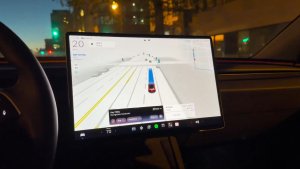
Addressing critics who argue that autonomous driving requires LiDAR, radar, and HD maps, the team reiterated its pure-vision stance. According to Tesla, the core challenge of self-driving is intelligence — predicting future road events through vision models rather than relying on brittle pre-mapped sensors.
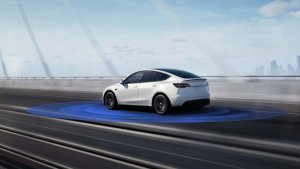
Engineering teams also highlighted extreme aerodynamic efficiency. Cybercab achieves a drag coefficient under 0.20, making it one of the most aerodynamic passenger vehicles ever put on public roads.
Noticeably absent from the stage remarks was any update on Tesla’s long-touted plans to sell the Cybercab to individual customers who could rent it out on the Robotaxi network, but we weren’t really expecting news on that to come so soon. Instead, the event focused squarely on the manufacturing behind the Cybercab and commercial ride-hailing deployments. Here’s a video of the keynote presentation, courtesy of longtime Tesla watcher @SawyerMerritt who was in attendance:
Here is the full Cybercab launch event presentation: pic.twitter.com/HksZTCmPEH
— Sawyer Merritt (@SawyerMerritt) September 4, 2026
‘Unboxed’ Manufacturing and Hardware Exhibits
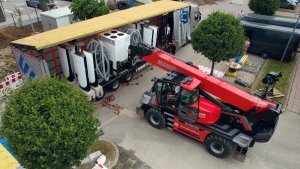
On the exhibit floor, attendees got an up-close look at Tesla’s novel, modular assembly process for the Cybercab. Event videos shared on X by community members @DavidMoss and @BLKMDL3 showed off an exploded, walk-around display of Tesla's “Unboxed” manufacturing method, exposing the bare structural sub-assemblies.
The Unbox Process of Tesla Cybercab up close pic.twitter.com/OzHBGDmZC6
— David Moss (@DavidMoss) September 4, 2026
Rather than running a stamped metal unibody down a single linear assembly line, Tesla’s new approach builds the car as parallel sub-modules. Front gigacastings, seating trays, and outer panels are assembled separately before coming together at the very end.
Cybercab Unboxed Process is so cool to see!
— Zack (@BLKMDL3) September 4, 2026
This makes high volume production easier and cheaper. pic.twitter.com/D5A0vsWOdV
Speaking at the exhibit, Cybercab lead product engineer Eric Earley noted that going Unboxed has “unlocked a 50% reduction in [manufacturing] line size while increasing the output of the line.”
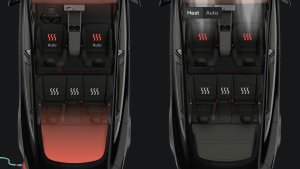
Other floor exhibits highlighted core Cybercab hardware and how it is different (and better), not just from other Tesla models but from pretty much anything else on public roads right now. One such display showed off Tesla’s Super Manifold V3 heat pump, which makes its debut inside the Cybercab. Tesla said it is 38% more efficient than other thermal systems and 80% of its production is completely automated.

The drive unit at the heart of the Cybercab was also on display. It features redesigned motor windings, with Tesla boasting it is 18% smaller while being 25% lighter and more efficient than some of the best electric drive units in production.

One of the exhibits outlined how the Cybercab is the first Tesla to use a brake-by-wire system, completely eliminating the need for brake lines or fluid. Instead, there’s an actuator on each brake caliper that’s triggered with an electrical signal. Not only does the lack of brake fluid make maintenance easier, but getting rid of brake lines that have to run across the length of the vehicle likely also helped with the new Unboxed manufacturing process.

Another exhibit had gold Cybercab body panels on display, showing off the Reaction Injection Molding (RIM) process Tesla engineered for Cybercab production. Paint is injected directly into the body panels during production, cutting manufacturing cycle times from hours waiting for the paint to cure to just minutes and reducing supply chain and manufacturing emissions for parts made using this process by 35%.

We even got a more in-depth look at how Tesla is integrating Starlink dishes directly into the Cybercab’s roof for faster, more reliable connectivity.
Starlink integration on Tesla Cybercab shown more in detail at tonight’s Launch Event pic.twitter.com/Ib23TK8n2L
— David Moss (@DavidMoss) September 4, 2026
Cabin Specs, Safety, and First Public Rides
Tesla also released official rider and safety guidelines for the Cybercab. Despite its compact footprint, removing the steering column and pedals unlocks 43.4 inches of front legroom — surpassing the Model Y at 41.8 inches. The rear cargo trunk holds 20.2 cubic feet (572 liters) and up to 220 pounds, easily accommodating two checked suitcases, a folded stroller, or a compact wheelchair.
Cabin safety relies on nine cameras and a ceiling-mounted radar sensor that detects whether a seat holds an adult, a child seat, or is empty, automatically tailoring airbag deployment. The doors also feature a dedicated mechanical latch that functions without electrical power and is built right into the regular electronic release, debuting Tesla’s new door handle design.

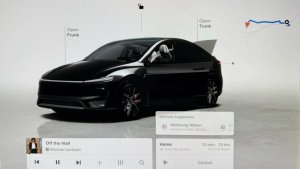
Inside, the massive 21-inch infotainment screen supports Epic Games’ Unreal Engine for impressive UI animations and gaming, and cabin lights pulse to music while under-seat ambient LEDs match the vehicle's exterior light bar color. For privacy, a green indicator illuminates whenever the interior camera is active, and media apps and search history wipe clean after each ride.

The event capped off with Cybercab demo rides around downtown for attendees. Tesla has already been testing steering wheel-less Cybercabs in Austin for months, and now the initial commercial fleet of Cybercab units is officially available for rides on the Robotaxi app in Austin.