Getting passenger feedback during the early stages of a commercial vehicle rollout is crucial, especially when that vehicle eliminates the driver entirely. Following the first few days of public passenger trips in Austin, Tesla is already asking Cybercab riders what they would like to see changed or improved, signaling that interior hardware and cabin amenities may not be set in stone.
The customer feedback push was highlighted on X by @SawyerMerritt, who was among the first public Cybercab riders during Tesla’s launch event in Austin last week.
The digital survey arrives just days after Cybercabs officially joined the Robotaxi fleet, providing commercial public rides across Austin. Recent passengers are receiving an email prompt titled “Take Our Survey,” asking them to review their trip and suggest future vehicle updates.
Wishlist Amenities: From Ventilated Seats to Tray Tables
The centerpiece of the questionnaire focuses on potential creature comforts. Tesla explicitly asks riders to pick up to three features they would most like to see added to the Cybercab cabin:
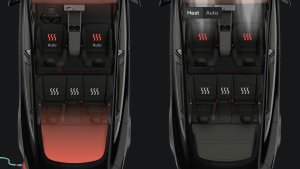
Heated seats
Ventilated seats
Fully reclining seats
Tray table
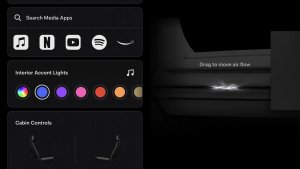
Wireless phone charger
Better sound system
More storage
None of these
Other (please specify)


The options hint strongly at how the Cybercab’s interior could evolve as production ramps up. Tesla chose to skip heated/ventilated seating for the Cybercab, with the vehicle instead automatically warming (or cooling) the cabin for riders before picking them up. It also lacks wireless phone charging — commonplace on Tesla vehicles, forcing riders to make do with wired charging through USB-C ports.
While the current cabin focuses on stripped-down minimalist efficiency to keep per-mile fares low, adding items like a fold-down tray table or HDMI input for the massive 22-inch screen would transform the two-seater into a mobile workspace for commuters.

Similarly, wireless charging pads and ventilated seating would solve common complaints on long summer rides, while a write-in “Other” field lets riders pitch custom additions. The fact that Tesla is polling users on physical hardware suggests engineering teams are open to iterating on seating and console molds before locking in high-volume assembly lines.
Gauging Ride Comfort and Fleet Logistics
Beyond potential hardware add-ons, the rest of the survey evaluates day-to-day operations. The form asks passengers for an overall satisfaction score before rating specific operational elements on a five-star scale.
Riders are prompted to grade vehicle availability and wait times, door functionality, center touchscreen responsiveness, mobile app smoothness, seat comfort, interior space, overall ride comfort, cabin cleanliness, and cargo capacity. The questionnaire wraps up with a standard Net Promoter Score asking how likely passengers are to recommend the service to people they know.
Gathering direct feedback on door mechanics and interior space makes sense given the Cybercab’s unique upward-swinging doors and two-seat layout. As Tesla gathers real-world data from Austin streets, passenger responses could directly shape the next production revision of the driverless platform.