Owners of older flagship Tesla vehicles running Hardware 3 (HW3/AI3) have been patiently waiting on the sidelines while the more mainstream Model 3 and Model Y received all the new features and improvements in Full Self-Driving (Supervised) v14 Lite. That wait appears to be ending. During a brief exchange at last week’s Cybercab launch event in Austin, Tesla AI chief Ashok Elluswamy revealed that FSD v14 Lite for Model S and Model X was slated to ship days ago, pointing to an imminent rollout.
Automotive journalist and podcast host Ryan McCaffrey (@DMC_Ryan) shared the update on X after catching up with the executive in Texas.
For my @Tesla friends – and specifically Model S & X owners with HW3 who are waiting on FSD v14 Lite – I spoke to @aelluswamy at the Cybercab launch, & when I asked for an ETA on v14 Lite for S/X owners, he said, "Oh, I thought it was supposed to go out last week."
— Ryan McCaffrey (@DMC_Ryan) September 7, 2026
So: soon! 🙌
Catching Up With Model 3 and Model Y
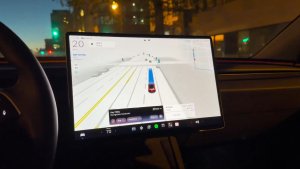
The release will close an annoying software gap between vehicle lines. HW3 vehicle owners had to watch for nearly two years as newer Hardware 4 (HW4/AI4) vehicles pulled ahead of them in FSD capabilities, and now HW3 Model S/X owners have been forced to do the same as FSD v14 Lite rolled out to Model 3 and Model Y. When Tesla first launched FSD v14 Lite in June, the build was restricted to early access testers on mass-market vehicles.
Things progressed after Tesla rolled out a new FSD v14 Lite build with added features in July. Soon after, Tesla released FSD v14 Lite publicly, but deployment remained strictly bound to HW3 Model 3 and Model Y builds.
FSD v14 Lite has gone global since, with Tesla rolling it out internationally in South Korea before confirming that FSD v14 Lite is also in active development for Australia and New Zealand. Bringing the distilled, optimized FSD branch to Model S and Model X would finally unify the fleet.

Distilling Intelligence Onto HW3 Silicon
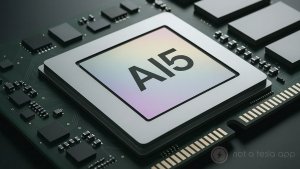
FSD v14 Lite is a distilled edition of the mainline v14 architecture, heavily compressed to run on legacy computers. Tesla’s older HW3 computer has roughly 15% of the memory bandwidth found on current-generation HW4 silicon, creating a hard physical ceiling for onboard neural networks.
To keep older cars capable, engineers compressed the main V14 branch’s parameters into something HW3 could use to mimic the driving decisions of the larger model. However, v14 Lite is essentially the end of the line for this generation of silicon regardless of vehicle model. Tesla has confirmed that HW3 cars won’t support unsupervised autonomy (or the upcoming FSD v15 update, for that matter).
Until Tesla gets around to delivering the computer upgrades it has promised for HW3, v14 Lite serves as the best way for legacy owners to enjoy modern self-driving capabilities. With Elluswamy already expecting the build out the door, qualifying Model S and Model X drivers should see download alerts pop up any day now.