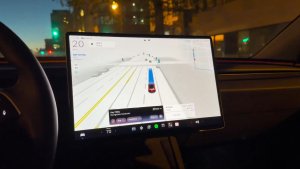
Close calls on the road happen in fractions of a second, often testing the limits of both human reflexes and automated software. One Tesla driver recently shared an encounter where Full Self-Driving (Supervised) swerved to avoid an oncoming vehicle pulling out blindly from a parking lot, safely dodging what could have been a nasty collision before the driver could even tap the horn.
The incident caught the attention of Tesla AI chief Ashok Elluswamy (@aelluswamy), who replied on X with a preview of how upcoming versions of the software will be even better:
“Glad you are safe. Even earlier prediction of hazards, even faster reaction time and overall significantly better safety and collision avoidance coming as part of the next big upgrade (v15).”
When Tesla released FSD v14.3 in April, the official documentation highlighted 20% faster reactions, and real-world avoidance maneuvers began showing greater confidence. Earlier this week, Tesla started rolling out FSD v14.3.9, which brings a new Automatic Collision Evasion feature that turns FSD into an active safety feature by allowing the autonomous stack to step in during manual driving to swerve around sudden road obstacles. According to Elluswamy, FSD v15 will take things even further.
A 10x Parameter Leap Under the Hood
The jump from v14 to v15 represents an architectural leap rather than a small point revision. While current builds rely on roughly one billion parameters, Elon Musk confirmed a 10x parameter upgrade is coming with v15, scaling the underlying model to ten billion parameters.
Current iterations of FSD are already showcasing impressive foresight and reaction times when it comes to avoiding collisions. We previously covered a real-world test where FSD (Supervised) reacted to sudden obstacles in just 0.13 seconds. FSD 14.3 also boasted an average reaction time of just 0.45 seconds in another test that compared it to FSD v14 Lite and the much older FSD v12.6.4. Tesla owners have also shared plenty of videos online where FSD has actively avoided accidents, including the one below where it reacted to a vehicle breaking a stoplight in just 0.2 seconds:
THIS is what makes V14.3 special
— Devin Olsen (@DevinOlsenn) April 11, 2026
Average human driving reaction: ~1.25s 🐢
Tesla Self-Driving reaction: 0.20s ⚡️
0.20 seconds is at the limit of human perception, but FSD is already executing a safety maneuver in that time. pic.twitter.com/CigK5H7THs
Here’s another video where a Tesla running on FSD reacted to a vehicle hurtling towards it from behind in what the driver calculated was just 0.17 seconds:
Tesla FSD reportedly avoided a crash by moving onto the shoulder just before impact.
— TeslaZoa (@TeslaZoa) August 12, 2026
According to the driver’s frame-by-frame analysis, FSD began reacting about 0.17 seconds before the at-fault vehicle started moving toward the Tesla.
The other vehicle ultimately crashed into… pic.twitter.com/CmcmO2IZB2
Tesla last month even petitioned owners to share clips of FSD avoiding accidents in real time, and the thread is full of videos showing off its superhuman reaction speeds:
Show us the wildest accident FSD Supervised has helped you avoid
— Tesla (@Tesla) August 17, 2026
Just reply with your video below
The larger vision model coming in v15 will only make FSD even more capable, allowing it to process even more information simultaneously and forecast what other drivers might do well before they make erratic moves.
Tesla is already testing FSD v15 in commercial fleets. It previously confirmed that Robotaxi vehicles are already running early builds of FSD v15 across active operating zones, with consumer rollouts expected late this year or early next year. Validating the software is crucial because Tesla plans to start scaling its Robotaxi network much faster once FSD v15 lands.
A Growing Hardware Divide
While the upcoming architecture promises major safety gains, it firmly draws the line on vehicle hardware.
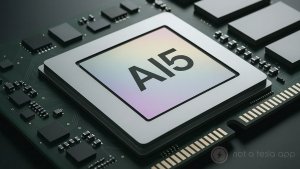
Running a ten-billion-parameter neural network demands serious memory bandwidth and processing muscle. Because of those computational ceilings, FSD v15 will be exclusive to vehicles running Hardware 4 (HW4/AI4) computers. Older Hardware 3 vehicles won’t get the v15 upgrade, and a “v15 Lite” release isn’t expected either.
Instead, HW3 cars will max out on distilled v14 models. Tesla this week started rolling out v14.2 Lite to early access testers, so there might also be a v14.3 Lite and subsequent v14 Lite iterations alongside an expansion to Model S and Model X. However, HW3 owners will ultimately need hardware upgrades to unlock FSD v15 and future unsupervised capabilities.
For HW4 owners, Elluswamy’s comments show that the next major software leap aims to turn close calls into non-events long before human reflexes can even register them, let alone react.