Stepping inside a fully autonomous vehicle changes how passengers interact with onboard controls. Without a steering wheel or traditional cockpit controls, in-cabin touchscreens often end up as the only physical interface in the entire vehicle. To prevent passengers from constantly having to lean forward and tap the center screen, Tesla has quietly turned its dedicated Robotaxi mobile app into a full-featured handheld remote control.
The functionality was highlighted on X by community member @Dannyijbol, who shared video footage from @OwenSparks showing the Robotaxi app in action during a Cybercab ride.
🚨 Awesome Cybercab feature! You can use the robotaxi app like a tv remote to control everything instead of reaching to the screen! @elonmusk said it’s a living room on wheels. LOVE THIS!!! Via @OwenSparks 👏 great informative video! 🔥@tesla @aelluswamy @SawyerMerritt… pic.twitter.com/PSKqettjma
— Dannyijbol (@Dannyijbol) September 4, 2026
The mobile remote features debuted earlier this month in preparation for the official start of Cybercab rides on the Robotaxi network. Cybercab officially started offering public passenger rides in Austin just a day after these features went live on the Robotaxi app. Now, riders can lean back, relax, and control cabin comforts entirely from their phone.
A Handheld Remote for Seats, Vents, and YouTube
The Robotaxi app handles a surprising amount of software controls and hardware adjustments that regular Tesla owners can’t touch from the standard consumer app.
Among the standout exclusive controls:
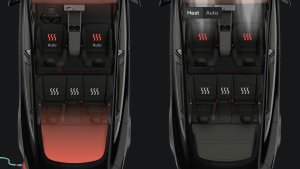
Vent Airflow Controls: In the standard Tesla app, you can turn climate control on or off and set the target cabin temperature. In the Robotaxi app, a familiar 3D visualization lets you drag your finger across the screen to physically aim the cabin air vents toward or away from you.

Seat Position Adjustment: Riders can slide their seats forward or backward and recline the backrests using clean software sliders right on their phones, rather than reaching down to side switches or touching the central touchscreen.
Interior Ambient Accent Lights: The app provides a color palette to swap cabin ambient lighting on the fly, picking between preset hues or solid shades to match your mood.

In-App YouTube Browsing: Passengers can scroll through YouTube videos and feed recommendations directly on their phones, tapping a video to instantly throw it onto the Cybercab’s massive 22-inch display.
Dedicated Grok Button: While consumer vehicles allow you to trigger voice commands by saying “Hey Grok,” the Robotaxi app features a dedicated tap-to-talk button that you can use to wake the AI assistant.

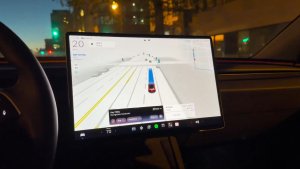
The Robotaxi app also has a route tracking card that gives you an overview of your trip, as well as integrations for other streaming services like Spotify and Apple Music. To top it all off, the Robotaxi app’s UI is really responsive, with minimal latency between tapping a button in the app and the action taking place in the vehicle. “We have the best UI team in the world,” said Tesla Engineering exec Phil Duan.
Why These Features Belong in the Standard Tesla App
While building a comprehensive remote control makes sense for driverless cabs, several of these features would be obvious upgrades for standard retail owners.
Rear-seat passengers in entry-level Model Y or Model 3 vehicles — which lack a dedicated second-row touchscreen — often have a hard time changing music, queuing a YouTube video, or adjusting climate vent airflow. All of that (and more) would be much easier if these controls landed on the standard Tesla app. The driver could just pass their phone to the second row, or Tesla could even allow paired passenger phones to access vent direction, seat heating, and media queues to make family road trips smoother.
With Tesla Robotaxis expected to begin running 24/7 next month alongside the deployment of FSD v15, millions of passenger miles will be logged with the Robotaxi app in use. Once Tesla validates how smoothly passengers interact with these remote controls, migrating the code over to the mainline Tesla app seems like a logical next step.