Tesla Autopilot has always required and will require full driver attention for the foreseeable future. Tesla enforced this by detecting whether torque was being applied to the steering wheel.
Tesla has relied on this method since the introduction of Autopilot, but unfortunately there have been several flaws with it for years.
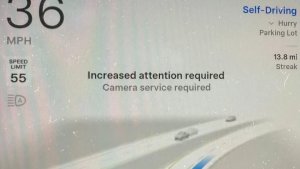
Since Tesla is looking for a certain amount of force to be applied to the steering wheel, sometimes the car can ask for the driver’s attention even when the driver is attentive and their hands are on the steering wheel. The interval that the car checks for active participation has changed over the years, but with it being somewhere around 30-60 seconds, it can sometimes become an annoyance to drivers.
The second reason that detecting torque on the steering wheel doesn’t work well as a driver monitoring system is that it is easily defeated. There have been numerous devices that mimic the force of hands on the steering wheel and let's face it, it doesn’t lead to anything good for the driver or Tesla.

Yesterday we saw the first vehicles to introduce a true driver monitoring system. For vehicles with a cabin camera, which include all Model 3 and Model Y vehicles, Tesla will be able to turn on their camera-based driver monitoring system (DMS). It appears that the feature is currently limited to the US and only for radar-less cars, but we expect this to change in the future. The release notes for 2021.4.15.11 state that:
Update: With the release of update 2021.32.5, Tesla has started to roll out driver monitoring to vehicles with radar as well. It is also expanding the feature to outside of the US.
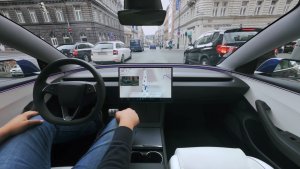
The cabin camera above your rearview mirror can now detect and alert driver inattentiveness while Autopilot is engaged. Camera data does not leave the car itself, which means the system cannot save or transmit information unless data shared is enabled. To change your data settings, tap Controls > Safety & Security > Data Sharing on your car's touchscreen.
Much like Tesla implements FSD, the cabin camera will be recording and analyzing the video stream and attempting to detect several objects and driver attributes. Each attribute then gets a probability assigned to it. If the threshold is high enough for any given attribute that Tesla deems as the driver not paying attention, then the car can take additional action from there such as turn off Autopilot, pull over or ask the driver to pay attention.
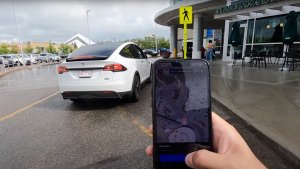
According to GreenTheOnly on Twitter, the camera will be detecting whether the driver is looking down or to the side and tracking eye movement and detecting other things as well such as whether the driver is wearing sunglasses and how well the camera can see. Although Tesla is looking for a variety of distractions, it looks like they are only currently triggering alerts when the driver is on their phone and not looking at the road.
The first cars have started rolling out with this feature enabled and it hasn't replaced Tesla’s steering wheel torque detection, but is providing another layer of protection. We hope as Tesla expands its capability in the future it may one day replace having your hands on the Tesla wheel completely.
Tesla has also recently rolled out detecting whether there is a driver in the driver’s seat during the use of Autopilot. It’s possible Tesla will create an algorithm with all of these attributes and ultimately decide whether the driver is paying attention or not. This could greatly reduce the amount of times the driver is asked to pay attention when they already are and also increase safety by reminding us when we’re not.