There was a crash in Florida recently where a Tesla hit a stopped Florida Highway Patrol vehicle that was stopped on the side of the road. The trooper was assisting the driver of a disabled vehicle. Fortunately, the trooper wasn't in their vehicle and was uninjured. The driver of the Tesla and the driver of the disabled vehicle had minor injuries.
There have been a series of episodes in which a Tesla on Autopilot has hit a stopped emergency vehicle, and the National Highway Traffic Safety Administration (NHTSA) has opened an investigation. We Tesla drivers, at least those of us who pay attention, already know the root cause of these accidents. And there are two solutions coming down the pipeline.
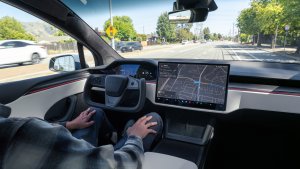
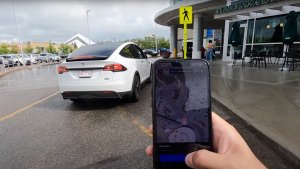
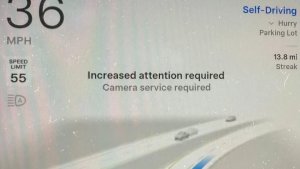
The basic problem is that plain old ordinary Autopilot doesn't seem to “see” parked vehicles. We see on our center screen what our cars seem to see, Go ahead out to your car. Drive to a street where there are painted lane lines and parked cars. Engage Autopilot and drive down the street. Your car will stay in its lane, but parked cars, for the most part, won't show up on your center screen. Go ahead and do that. I'll wait...
See, most of the parked cars didn't show on your center screen. Some did, but not all of them. Now imagine what would happen if you're on a limited-access highway. There's a disabled car, and a police car stops behind it. The police car parks with its light bar flashing, and it's sticking out into the travel lane a bit to notify drivers that they need to move over to the next lane. That's the procedure for protecting the disabled car and its driver. But your Tesla, on Autopilot, is firmly glued to the center of the travel lane. Since it doesn't see the parked police car, even with the light bar flashing, the right front fender of the Tesla hits the left rear fender of the police car. Computers don't do what you want them to do. They do what they're programmed to do.
And why does this accident happen? Because most drivers don't fly planes. What? How does flying have anything to do with this? If you're a pilot, you've been taught that engaging the autopilot in a plane doesn't absolve the human pilot of any responsibility. All it does is make the job of flying the plane less labor-intensive. The pilot knows that they still need to pay attention. That message doesn't seem to have reached all Tesla drivers even though Tesla tells them that they need to keep paying attention. If the driver had been paying attention, they'd have seen the flashing lights in plenty of time to shift over manually to the next lane.
Driver Monitoring
So, what are the two solutions in the pipeline? The first solution is that Tesla software update 2021.32.5 is going to activate the little camera inside the car above the rearview mirror. It will be watching the driver's eyes. If the driver starts looking somewhere else besides the road for more than a few seconds, the car will notify the driver. If the driver doesn't start paying attention after about thirty seconds, Autopilot disengages with a loud alarm and a big red steering wheel icon on the screen. And the driver had better be ready to take over. The camera-based driver monitoring system is rolling out to radar-equipped cars.
FSD Beta
The other item coming down the pipeline is the beta version of Full Self Driving. Of course, that's only available to people who have shelled out for FSD. But if you do have it, you can see from this video that FSD beta v 9.2 does see parked cars. It still doesn't see white concrete columns that hold the Seattle monorail up, so there are improvements yet to be made.