Tesla is facing a new and unusually personal legal challenge regarding its advanced driver-assistance software. According to Electrek, a Texas woman has filed a lawsuit seeking over $1 million in damages from Tesla following a collision involving her Cybertruck, alleging that the vehicle’s Full Self-Driving (FSD) system failed to navigate a freeway split and instead drove directly into a concrete barrier.
The case, filed in Harris County District Court, arrives as the automaker deals with increasing scrutiny over its autonomous claims. It follows closely behind a separate federal ruling that upheld a $243 million verdict against Tesla in a fatal 2019 Autopilot crash.
The Cybertruck Crash and Allegations Against Musk
According to the filing, plaintiff Justine Saint Amour was driving her Cybertruck on a Houston freeway in August 2025 with FSD engaged. As the road split at an overpass, the vehicle reportedly failed to follow the curve and attempted to drive straight into a barrier. While Saint Amour tried to take control, the impact occurred before she could steer clear.
What makes this lawsuit stand out is its direct focus on Tesla’s leadership. The petition accuses Tesla of “negligently hiring and negligently retaining Elon Musk as CEO, and allowing him to participate in product design decisions.” The filing claims Musk ignored engineer recommendations to use LiDAR or radar sensors, choosing instead to rely only on cameras. The plaintiff’s attorneys describe Musk as “an aggressive and irresponsible salesman, who has a long history of making dangerous design choices, and over-promising the features of his products”.

Legal Merit and Regulatory Headwinds
While the Cybertruck itself holds 5-star crash safety ratings from the NHTSA, the software controlling it remains under fire. This lawsuit argues that the marketing of the system is fundamentally misleading. It notes that while competitors like Mercedes-Benz offer Level 3 systems that tell drivers when to take over, Tesla’s Level 2 system requires constant supervision despite the "Full Self-Driving" name.
The merit of these claims often hinges on whether a driver was paying attention, but regulators are beginning to side with the idea that the branding itself is a problem. In late 2025, a California judge ruled that Tesla’s FSD marketing is “actually, unambiguously false and counterfactual”. Furthermore, the NHTSA is currently investigating 2.88 million Tesla vehicles equipped with FSD after connecting the software to dozens of incidents, including 14 accidents. Tesla is starting to move away from its “Full Self-Driving” and “Autopilot” branding amid mounting pressure.
A History of Branding Battles
This is far from the first time Tesla’s names for its tech have caused trouble. To avoid a 60-day sales ban in California recently, Tesla had to stop using the "Autopilot" name for new sales and pivot to "Full Self-Driving (Supervised)" in its marketing. While the company has successfully defended its marketing in the past, the tide seems to be turning in U.S. courts.
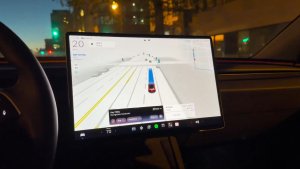
On the other hand, Tesla continues to release updates that show FSD detecting and avoiding crashes at high speeds, illustrating the paradox of the software: it is getting better, yet it still faces massive liability for its remaining mistakes.
As this million-dollar case moves forward, it could force a conversation not just about how Tesla’s cars drive, but whether the CEO's personal design philosophy is a legal liability for the company.