While much of the focus from Tesla’s Q2 2025 Earnings Call was centered on the future of FSD, Robotaxi, and the next steps towards an affordable vehicle, we also got to look at what Tesla intends to do with its other businesses.
Tesla’s executive team detailed their progress and shared ambitious roadmaps for what can be seen as the next three pillars of Tesla’s growth: Semi, Optimus, and Energy. These updates gave us a clearer picture of the foundation that Tesla is building for a future that shifts its focus away from consumer vehicles.
The Industrial Workhorse: Tesla Semi
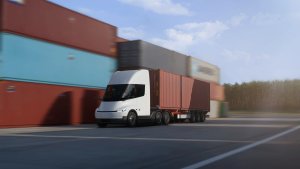
After years of testing prototype vehicles alongside industrial partners, Tesla is now on the path to mass production. The bottlenecks for Semi have been refining the final prototypes, which are now nearing final production stages, as well as battery capacity issues.
While Tesla initially planned to use the 4680 Gen 2 battery, known as the Cybercell, they’re now planning to use 2140 cells for the time being until they can ramp up production for the 4680 cells. Tesla is now finalizing the last few pieces of machinery at the Semi factory in Nevada, and has set the goal of reaching a capacity of 50,000 Semis per year.
While that number may seem ambitious, Tesla has already signed on industrial partners and will be installing Semi Chargers (previously known as Mega Chargers) across the United States to support logistics operations.
Tesla initially plans to take delivery of a fleet of Semis for its internal logistics operations and will then issue them to its own suppliers and partners, before addressing smaller fleet orders. The first external deliveries are planned for early 2026.
The Future of Labor: Optimus
The most forward-looking part of the call - as with most recent Earnings Calls, has been the update on Optimus. Tesla’s humanoid robot is progressing at a fast pace, with plans that extend well into production, not just prototyping.
In 2026, Tesla expects to have its initial batch of over 1,000 Optimus robots operational in its own factories, following limited production in 2025. Back in Q4 2024 and Q1 2025, Tesla initially stated that it would have 5,000 units produced by the end of this year. However, there have been hurdles in finalizing components and reducing the need for rare-earth magnets in the Optimus motors.
Tesla produces all the components for Optimus in-house, including the power electronics, motors, batteries, chassis, and the FSD computer, which serves as the brain of Optimus. Tesla previously announced that it would also use Grok for Optimus, helping bring the robot to life.
Tesla has been quickly iterating on Optimus. V3 will be the production version of Optimus, which is nearing completion. This is the version that will be included in the initial 1,000 robots.
Elon has said that they intend to produce 1 million robots per year by 2030, giving a 5-year timeline to fully ramp up mass production. Much of this will depend on how Optimus progresses. When it’s able to perform human tasks at lower costs, then companies will bite. The more capabilities it supports, the more job roles it can fill, and the more Tesla will sell. While it still has a long way to go, everything is progressing simultaneously, from the hardware to FSD to Grok; they’re all continually improving.
Training Optimus
The same AI inference principles that Tesla uses for vehicle FSD are used to train Optimus FSD. This makes it easy for Tesla to apply learnings from one of its real-world AI products to another real-world AI product.
Tesla is working to continue expanding Optimus’ training set for factory and household tasks, meaning that once it is released to external customers by the end of 2026, it will be relatively capable but still able to learn even more.
With that said, we don’t expect Optimus to be cheap, at least initially. An extraordinarily complex and capable humanoid robot is likely to cost more than $40,000 during the initial production run, with the hope that mass production will bring the cost down to closer to $20,000 per unit.
Tesla Energy
Tesla Energy is always humming along quietly, but this quarter was another fantastic one. Q2 saw energy storage deployments reach a new record of 5.7 GWh - a 30% increase quarter-over-quarter. Much of this demand is driven by Megapack, but Powerwall also saw record deployments for the fifth consecutive quarter.
Megapack is now finally deploying from Tesla’s new Mega Shanghai facility to customers worldwide, who are willing to accept increased pricing due to tariffs. This is due to the sheer real-world positive impacts that Megapack is having on customer energy grids - it is capable of stabilizing and self-starting grids in the event of a partial or total blackout, an invaluable capability for regions that struggle with energy challenges, such as Puerto Rico.
Tesla’s updates on the Semi, Optimus, and Energy show a company aggressively executing on a strategy that extends far beyond the driveway. The Q2 call made it clear that Tesla is not just building consumer vehicles; it’s building commercial transport, robotics, and the energy infrastructure of the future.