Deciding between leasing or buying a vehicle used to be a simple math equation involving interest rates, residuals, and monthly payments. Now, with vehicles smarter than ever and evolving rapidly, the choice of how to acquire your Tesla is a bet on the future of technology.
With the confirmation that next-generation AI5 hardware is delayed until at least mid-2027 and the introduction of lease buyouts, there have been a lot of moving goalposts.
This guide breaks down the total cost of ownership, the technology risks, and the pros and cons of purchasing or leasing a Tesla to help you decide the best path.
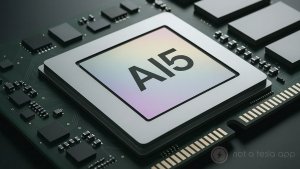
The AI5 Factor
For the past year, the prevailing wisdom was “lease, don’t buy,” based on the fact that the current AI4 hardware in current vehicles would be rendered outdated by AI5 in late 2025 or early 2026. Now, that timeline has changed dramatically.
Tesla confirmed that AI5 likely won’t ship until late 2027, and that the Cybercab would launch with the current generation AI4 hardware instead. That means that for the foreseeable future, AI4 is here to stay (at least until AI4+).
This reduces much of the technological risk behind buying. If you’re buying a new Tesla today, you’re not buying a smartphone right before the new model drops; you’re buying a mature platform with a long supported lifespan.
The 2026 Pricing Matrix

Below is a breakdown of estimated costs for the current lineup. This table is based on standard US pricing for 2026, assuming a 72-month loan, versus a 36-month lease with 10,000 miles per year. It does not include taxes or regional incentives.
Vehicle Model | Purchase Price | Est. Loan | Est. Lease |
|---|---|---|---|
Model 3 Premium AWD | $46,490 | $639/mo ($3,250 down, 0.99%) | $449/mo ($3,000 down) |
Model Y Premium AWD | $48,990 | $674/mo ($3,300 down, 0.99%) | $699/mo ($3,000 down) |
Cybertruck AWD | $79,990 | $1,270/mo ($4,050 down, 5.34%) | $949/mo ($5,000 down) |
Understanding Lease Mileage
While leasing offers a lower monthly payment, it imposes a strict mileage cap.
Tesla offers leasing at 10,000, 12,000, and 15,000 miles per year, with different rates based on the residual value at lease end. Tesla also offers additional mileage as a purchasable option, depending on your region.
If you exceed the annual mileage, you will either need to purchase additional mileage if available in your region or pay your contract-based mileage penalty, typically charged at $0.25 per mile. That means that if you drive 5,000 extra miles on a 10,000-mile lease, you will owe $3,750 in penalties alone.
The Breakeven Analysis
If we look at the total cost of ownership over a longer period, like 6 years, we see some trends. Over the first three years, the cost of ownership for leasing is much lower. However, when the lease ends at the 3-year mark, the cost spikes - a new potential down payment, along with a new lease.
At the six-year mark, if you purchased, you finish paying off your vehicle loan, bringing your monthly cost to zero, excluding maintenance and insurance. This is where the key flip is - if you plan to retain your Tesla over a longer period, you’re best off purchasing.
This is especially true with the introduction of Tesla’s Extended Service Agreements and upcoming additional battery warranty plans, which reduce the risk of a major repair by extending the warranty on your vehicle’s key parts.
Lease Buyout
Tesla allows customers to buy out leases at the end of the lease term. This adds a safety valve for those who lease and want to keep their vehicles after the 36-month term is up. You can purchase your vehicle for the residual value (which is calculated when you sign the lease) - either buying it outright with cash, or financing the much lower purchase cost through a third party.
This can be a fantastic option for many who want to try an EV or a new vehicle without taking on the risk of purchasing upfront, while still allowing you to keep your car at the end of the contract.
Insurance & Customization
In general, leasing requires higher liability limits for insurance, depending on your jurisdiction. This can slightly increase premiums compared to state-minimum policies for purchased cars. However, if Tesla Insurance is available in your region, they standardize these rates based on safety scores, not on vehicle ownership or leasing status, which could potentially play to your advantage, especially if you’re using FSD.
However, in terms of customization, leasing can be a challenge. You won’t be able to tint the windows, install PPF, or change out or install new parts, unless you want to remove all of it upon lease return.
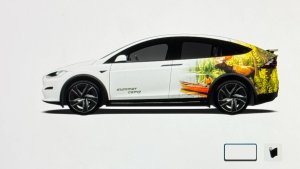
If you purchase your vehicle, it's yours to do with as you please - and that includes whatever modifications you’d like, whether it be a color-changing wrap, or new tires and shoes for better grip on the track or trails.
The Verdict
For the majority of buyers eyeing the Model 3 or Model Y, purchasing remains the smartest financial play. With the AI5 hardware transition now pushed to 2027, the risk of near-term obsolescence is gone, making these vehicles safe a safe bet.
If you drive more than 15,000 miles annually or plan to keep the vehicle longer than the break-even point, buying allows you to build equity, customize your ride, and avoid the strict mileage penalties of a lease.
However, leasing does have its advantages. Every three years, you’ll get the latest and greatest, and it insulates you from potential out-of-warranty repairs.