After a hiatus of more than three years, Tesla is finally taking steps to begin expanding its insurance business again. Tesla Insurance has officially launched in Florida, making it the 13th US state to receive in-house insurance coverage.
This was an expected step, as Tesla recently began underwriting its own insurance policies rather than handing them to a third-party underwriter.
Breaking the Drought
For a long time, Tesla Insurance seemed to be stuck at just 12 states, facing regulatory hurdles, internal restructuring, and long claim times. This Florida launch could mark a restart to the program’s expansion.
With Florida added, the full list of supported states now includes Arizona, California, Colorado, Florida, Illinois, Maryland, Minnesota, Nevada, Ohio, Oregon, Texas, Utah, and Virginia. Of those states, California remains the lone state that doesn’t tie rates to the driver’s Safety Score.
With the addition of Florida, Tesla now covers approximately 48% of the United States population.

Safety-Score Enabled
Like most other regions, the Florida policy utilizes real-time driving behavior to determine premiums. This means that your monthly rate is directly tied to your Safety Score.
Tesla factors in several key variables to determine your rate. Some of these are just like regular insurance policies, such as vehicle type, location, expected mileage, and coverage selection. However, Tesla also factors in key driving metrics, including Forward Collision Warnings, Hard Braking, Sharp Cornering, Close Following, and other statistics.
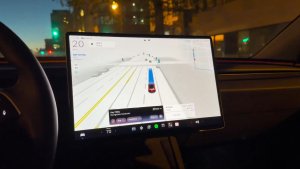
Tesla can also use data from vehicles to introduce additional features, such as the FSD Discount for Tesla Insurance. This discount helps reduce premiums for drivers who use FSD often, and can have a big enough impact to cover the monthly subscription cost of FSD.
Safe driving and using FSD can lead to substantial insurance savings, while aggressive driving can increase rates.
New Owners Only (For Now)
There is one major caveat for Floridian Tesla owners who are hoping to switch immediately with the news. Eligibility is currently restricted to those taking delivery of new Tesla vehicles. Existing owners looking to switch policies from a legacy insurance provider cannot sign up quite yet.
This new-vehicles-first rollout is likely a way for Tesla to stress-test whatever new systems they’ve implemented in Florida before opening the floodgates to the massive fleet of existing vehicles there.
Robotaxi & Unsupervised
Tesla has also been testing Robotaxi in Florida, and one of the key components from a regulatory standpoint with autonomous vehicles will be insurance. It is likely that Tesla’s Robotaxi rollouts will be closely linked to Insurance rollouts as well, to provide coverage for their own fleet.
Much the same applies to the offering of FSD Unsupervised for customers, which would shift liability from the driver to Tesla for the duration of the engagement, which would require an insurance policy to cover this change.