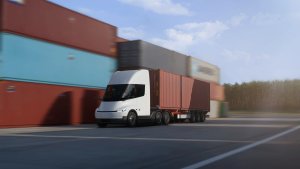
In a move designed to drive down production costs and increase supply chain resilience, Tesla has reportedly added a new battery manufacturer to its global roster. According to a new report from Chinese media outlet 36Kr, Tesla is now sourcing battery cells from Sunwoda Electric Vehicle Battery, making the company the fifth global power battery supplier for the American automaker.
Third-Gen LFP Tech
The battery cells supplied by Sunwoda utilize third-generation lithium iron phosphate (LFP) chemistry. Notably, these new cells support an increased charging rate of up to 3C, aligning perfectly with the wider industry push toward ultra-fast charging capabilities.
According to sources familiar with the project, these new power batteries have already begun shipping from Sunwoda's manufacturing facility in Yiwu, Zhejiang province.
3C Charging Rates
In battery terminology, the "C-rate" measures how quickly a battery is charged or discharged relative to its maximum capacity. A 1C rate means a battery can conceptually be fully charged in one hour. A 3C charge rate means the battery can absorb a full charge in just one-third of an hour, or roughly 20 minutes.
For comparison, Tesla's current premium NCA (nickel-cobalt-aluminum) cells can briefly peak near 3C when pulling 250 kW at a Supercharger, but the charging curve drops significantly as the battery fills, resulting in a much slower average charging rate over the entire session.
Tesla's current standard-range LFP packs are even more conservative, typically peaking closer to a 1C or 2C rate. Adopting a sustained 3C LFP cell from Sunwoda means a dramatically faster 10 percent to 80 percent charge time for entry-level models.
However, while 3C is a major leap for Tesla's LFP offerings, it is worth noting just how rapidly the broader Chinese battery market is evolving. Competitors like Zeekr have recently introduced their own LFP "Golden Battery," which boasts an astronomical 5.5C charging rate capable of replenishing the vehicle from 10 to 80 percent in just under 10 minutes.
Focused on Exports
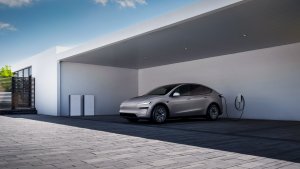
While Giga Shanghai is the highest-volume production facility in Tesla's network, the Sunwoda batteries are not yet destined for domestic Chinese consumers. The report notes that these new batteries are currently being equipped exclusively in vehicles manufactured at the Shanghai plant that are slated for export to overseas markets. There is currently no timeline for when, or if, these Sunwoda cells will be integrated into vehicles sold within China.
That means that these Sunwoda cells will make their way to vehicles within the rest of the Asia-Pacific market, as well as the European market, which Giga Shanghai supplies.
Change in Manufacturing Strategy
This new partnership also highlights a shift in how Tesla handles its battery integration. Historically, Tesla purchased pre-assembled battery modules from giants like CATL. With Sunwoda, Tesla is adopting a new business model by purchasing the raw prismatic battery cells directly. Tesla will then manufacture the battery modules and complete packs itself.
By taking full control of module and pack assembly, Tesla gains greater control over final battery costs.
Driving Down Costs
As the global electric vehicle market becomes increasingly competitive, securing affordable and reliable battery supplies is paramount. Bringing Sunwoda into the fold diversifies Tesla's global supply chain and reduces its heavy reliance on CATL as its primary Chinese supplier. This added competition gives Tesla significantly higher bargaining power, which is critical for boosting automotive gross margins and maintaining highly competitive vehicle pricing across the Asia-Pacific region and beyond.