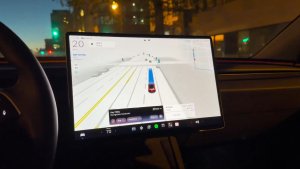
During the Q1 2026 earnings call, Tesla provided another rare, granular look at the adoption rates for its Full Self-Driving software. The newly released slide deck reveals that Tesla has officially transformed its driver-assistance suite into a massive software business, exceeding half a billion dollars in annual recurring revenue.
Subscription Boom
According to the official figures released in the deck, Tesla currently boasts 476,100 active FSD subscribers. Based on this adoption rate, the company is generating an impressive $546 million in recurring subscription revenue per year.
This milestone proves that Tesla's recent shift toward prioritizing a subscription model is paying off.
Outright Purchases and Total Reach
While subscriptions are driving the bulk of recent growth, the legacy purchasing model still accounts for the lion's share of active users. The Q1 slide deck confirmed that 823,900 owners have purchased the FSD suite outright.
By combining those outright purchases with its active subscription base, Tesla has amassed 1.3 million paid FSD customers globally. This represents a massive fleet of vehicles actively gathering localized driving data, validating edge cases, and continually training the neural networks that will power future unsupervised robotaxis.
One item of note is that the purchases include vehicles in regions where FSD is not currently available, such as China, the UK, and most European countries.
Funding the Future
Software revenue is incredibly important for Tesla's long-term bottom line. Unlike physical vehicle sales, which are subject to supply chain constraints, raw material costs, and manufacturing bottlenecks, software subscriptions carry incredibly high profit margins.
This $546 million recurring revenue stream will be vital for funding the company's ambitious goals, and it’s only going to grow, as Musk announced earlier this year that FSD subscription prices will rise as capabilities increase. As outlined during the earnings call, Tesla is expecting a staggering $25 billion in capital expenditures for 2026 to fund its Cortex 2 supercomputer, new manufacturing facilities, and the expansion of its uncrewed commercial fleets.
The continued growth of the FSD subscription base ensures that the company has the organic software cash flow required to safely finance this massive technological leap.