Tesla is traditionally known for building everything from scratch, but its latest move suggests it is looking for a shortcut to dominance in the robotics and AI space. According to the company's latest 10-Q filing, the automaker has entered into an agreement to acquire a mysterious AI hardware company for up to $2 billion.
The deal is structured primarily in Tesla common stock and equity awards. Interestingly, about $1.8 billion of that total is "subject to certain service conditions and/or performance milestones dependent on the successful deployment of the company's technology." While the filing confirms the massive price tag, neither Tesla nor the SEC documents mention the name of the company being acquired.
A Rare Strategic Pivot
Acquisitions are a rare move for Tesla. The company typically values vertical integration and prefers to do all of its development in-house, even going so far as to launch its own AI chip manufacturing plans via the TERAFAB project. To date, Tesla has acquired only roughly 10 companies in its entire history, usually focusing on battery tech or manufacturing automation.
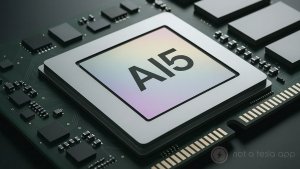
This mystery company must possess unique intellectual property that Tesla and its current partners cannot provide. This is particularly notable given that Tesla already has a deep working relationship with Elon Musk’s xAI — which was recently acquired by SpaceX — through the TERAFAB project. Tesla even invested $2 billion into SpaceX to secure its stake in that ecosystem. If Tesla is spending another $2 billion on a new player, it likely involves specialized sensors or low-power processors that are essential for mobile AI.
The Optimus Connection
Speculation is already pointing toward the Optimus humanoid robot. Tesla intends to unveil a production-ready version of Optimus later this year, and the hardware required to make a robot walk, balance, and interact with the world is vastly different from what is needed for a car.
During the Q1 2026 Earnings Call earlier this week, Musk announced that the company is increasing its capital expenditure outlook for the year from $20 billion to $25 billion. It is highly probable that this acquisition is a major piece of that spending. Tesla likely needs a specific type of AI silicon that can handle real-time spatial reasoning at the "edge," which would be the holy grail for a robot intended to work in factories and homes.
Vertical Integration at Scale
By bringing this hardware team in-house, Tesla is ensuring that its future robots and vehicles aren't dependent on outside suppliers like Nvidia or Intel for specialized tasks. This fits perfectly into the broader Musk ecosystem, where Tesla, SpaceX, and xAI share data and engineering talent to move faster than traditional competitors.
As the deal moves toward closing, the industry will be watching closely to see which name finally appears on the dotted line. Whether it's a specialist in computer vision or a pioneer in neural processing units, this acquisition is a clear signal that Tesla is no longer just a car company — it's an AI powerhouse.