Today, Tesla held its 2026 Q2 Earnings Call, and once again, it was another excellent look into how the company has performed over the last quarter, as well as a peek into what’s coming next.
Elon’s opening statement covered the record Q2 deliveries and the fact that the Model Y is once again the best-selling car of any kind in the world. Elon also believes that people are buying FSD, with the car attached, rather than the other way around. He believes that FSD has become a demand driver, and as FSD continues to get approved globally, demand will continue to rise.
He also touched on the investment in AI data centers, and the work it is taking to expand Tesla’s core businesses toward humanoid robotics and autonomy, as well as vertical integration of batteries, cells, solar cells, solar panels, chips, and memory.
Whether you missed the Earnings Call because it was a busy evening, or are just coming back for some facts, we’ve got the full Earnings Call, including the Q&A, broken down into neatly summarized bullets as usual.
You can also review the earnings call slide deck here.
FSD & Robotaxi
Active FSD subscriptions expanded to 1.48 million, reflecting a 56% YoY increase
In North America, over 55 percent of new vehicle deliveries included an FSD subscription at purchase
Cumulative miles driven on FSD (Supervised) are approaching 12 billion.
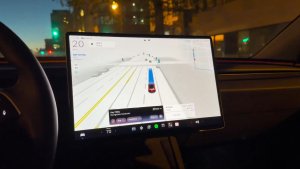
Tesla initiated deployments of FSD V14-Lite for AI3 vehicles in the US and South Korea, with more rollouts on the way globally
V14-Lite distills AI4 driving behaviors into AI3 compute constraints, meeting the same high bar of safety and performance
Following initial deployment authorization in the Netherlands, Tesla secured additional regulatory approvals in Lithuania, Estonia, Denmark, and Belgium
Cumulative FSD mileage in Europe has exceeded 50 million kilometers (31 million miles)
Unsupervised Robotaxi operations expanded to seven major metropolitan areas.
Tesla expanded the geofence in Austin, while launching Unsupervised commercially across Miami, Orlando, and Tampa
Preparations for deployment in Phoenix and Las Vegas continue, while the San Francisco Bay Area continues to use safety drivers due to state regulatory requirements
Cumulative paid Robotaxi mileage reached approximately 2.5 million miles
Robotaxi goals are very ambitious, but being held back to ensure that no accidents or incidents occur, which would fully stop rollout and make headline news
The ideal goal is no harm done to humans, or even pets, while they continue to push FSD to increase road safety
Scaling within the US will continue, with a growth rate of 10% a week
Ashok Elluswamy on Robotaxi
Robotaxi has had an impeccable safety record to date, with 0 notable incidents, and other reports have only been other actors impacting Tesla vehicles while stationary over 380,000 miles
Ashok confirmed that you can have safe and functional autonomy with just cameras, with no need for radar or LiDAR or other sensors
Tesla has grown at double-digit rates on a week-over-week basis on miles driven unsupervised, which means deployments and rollout speed will increase
Tesla expects to roll out to entire states at some point, rather than city-by-city
Robotaxi is already running FSD V15, with 7 major track improvements over V14
V15 will be even safer than V14 is today, and that will help sustain the growth rate of autonomous Robotaxis
Tesla has matched the production rate of Cybercab to match the expected fleet deployment rate
Tesla AI & Chips
Onsite training compute capacity in Texas more than doubled in megawatt capacity during the first half of 2026
Cortex 1 now clocks in at 90 MW, while the new Cortex 2 clocks in at 115 MW.
Cortex 2 supports software training for both fleets and Optimus, with more additions scheduled through the end of 2026 and into 2027
Tesla is continuing to work on its dedicated, in-house development chip-fab in Austin
This local fab will enable rapid chip design and production for cyclic testing
It will also allow Tesla to make high-risk, high-payout bets at low counts, unlike what it can do with other manufacturers
Plan is for long-term, internal supply chains for specialized, AI-focused logic and memory
TERAFAB location is expected to be announced soon
It will have its own launch announcement and event, and won’t be squeezed into an earnings call
TERAFAB will be an absolute necessity for logic, memory, and packaging of chips required for AI, whether in vehicles, for training, or for robots
Tesla is also building Megapods with AI4 computers, in packaging similar to the current Megapack, along with x86 processors for running Digital Optimus
This will enable Tesla to scale AI compute by dropping these units at idle Superchargers and using the power that would otherwise not be used
Optimus
The freed-up space from the Model S and Model X lines is being converted into an Optimus production line, with initial manufacturing runs expected in Q3 2026
Early Optimus builds from Fremont will be deployed with “Optimus Academy” to accelerate training data collection and software development
Site development and construction for the dedicated Optimus facilities at Gigafactory Texas continue
Elon still believes it will be the biggest product ever, but one of Tesla’s greatest engineering and AI challenges
Getting a robot to do something without any programming will require lots of training of neural networks to be able to learn on the fly
Robots also need to be able to handle high wear-and-tear due to long times spent working, so they need to be robust enough to handle industrial and residential workloads
Elon once again noted the newness of the parts of Optimus, which means supply chains have to be built from the ground up, unlike with cars
Much of the supply chain is in-house or vertically integrated to prevent supply constraints during scaling, and because nobody else makes the parts
No humanoid robots today can do generalized tasks without programming, but Optimus will be the first to do it
It has the same or higher level of dexterity as the human hand, which will enable it to do nearly everything a human can do, if not more
Optimus FSD is the same as cars - photons in, controls out (and it's the same for Digital Optimus)
Digital Optimus will come first, as physical Optimus will need the skills developed and trained by Digital Optimus to work on computers and systems
Ashok Elluswamy on Optimus and Training
Optimus has been designed to match the appearance, but also the dynamics and dexterity of humans to enable it to do any tasks a human can do
Human workers at Tesla help to provide Optimus with examples, and a smaller, targeted training team does high-quality, high-resolution examples to confirm data
In addition, data from the internet is exceptionally useful, especially how-to videos
The data flywheel from the Optimus Academy will help bots to train more bots with reinforcement learning
Same end-to-end strategy that drives FSD: pixels in, controls out - and you’ll be able to ask Optimus to do something, and it should do it without any human input
Battery, Powertrain, & Manufacturing
Tesla achieved record Q2 deliveries of 480,126 vehicles, a 25% increase YoY
This comprised 467,762 Model 3/Y units and 12,364 other models.
Total quarterly production reached 451,758 vehicles, up 10% YoY
Global vehicle inventory dropped to 15 days of supply, down 38% YoY, representing a substantial inventory drawdown
Automotive margins declined from 19.2% to 16.3%, due to warranty true-downs, interest rate increases, and tariff relief ending
Tesla exited Q2 with its largest order backlog in history
Tesla has achieved 9.7 cumulative vehicle deliveries to date, 10 million expected early in Q3
Tesla is now also production-constrained by electronics (chips), as well as batteries, and still not demand constrained
Ongoing ramp of vehicle production at all factories will continue
Purpose-built Cybercab production officially commenced at Gigafactory Texas
Engineering test drives began on public roads during Q2, followed by autonomous rides for employees across Gigafactory Texas in July
Tesla has completed the decommissioning of the Model S and Model X line in Fremont
The Model YL officially launched in the United States in July following initial builds at Giga Texas
Regional delivery records were established across eleven international markets, including South Korea, Australia, Japan, and Taiwan
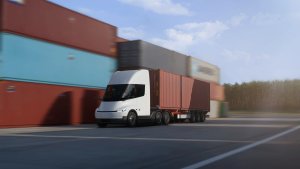
Building construction for Tesla Semi in Nevada is complete, and the factory commissioning phase begins now, with production to begin by the end of 2026
Production of 4680 cells at Gigafactory Texas surpassed a 40 GWh annual run-rate, supporting production ramps for Cybercab, Tesla Semi, and Model Y (no mention of Cybertruck)
Dedicated LFP cell manufacturing for energy storage products in Nevada entered its early ramp phase at 7 GWh capacity
Early ramp progress continued at the Texas cathode facility (10 GWh) and the Texas lithium refinery (30 GWh)
Construction on 4680 cell integration facilities at Giga Berlin continues
Tesla Energy
Energy storage deployments totaled 13.5 GWh in Q2, a 41% YoY increase
Energy gross margins declined from 39.5% to 20.4%, due to tariffs and other costs
Second highest quarterly volume in company history
Megafactory Shanghai continued ramping production, driving record deployment volumes across the Asia-Pacific region
Megafactory Texas entered its commissioning phase, with initial production of Megapack 3 and Megablock planned for later this year
Tesla introduced the Powerwall 3P (three-phase) in Germany, to expand across Europe later this year
The Supercharging network expanded by 2,400 stalls in Q2, reaching 82,357 connectors across 8,704 stations, which is a 17% YoY increase in capacity
Tesla has deployed improved trip planner predictions, stall availability forecasting, and dynamic waitlisting to better serve customers
Financials
Total revenue rose 26 percent year-over-year to $28.24 billion
Trailing twelve-month revenue crossed $101.1 billion
Automotive revenue reached $20.52 billion, up 23% YoY
Automotive regulatory credits dropped to $146 million, down from $439 million in Q2 2025
Energy storage revenue rose to $3.14 billion, up 13% YoY
Service and other revenue grew 50% YoY to a record $4.58 billion, generating $648 million in profit (a 14% gross margin)
The margin includes sales of merchandise, alongside Tesla Service income
CapEx doubled this quarter, resulting in free cash flow being negative this quarter
This is expected to repeat over the next few quarters as Tesla continues to build out more factories and datacenters
Tesla has more than enough free-floating cash to spend on this, and can also borrow against its current credit to be more capital efficient
Forward-Looking Outlook
Production for both the Tesla Semi and Megapack 3 remains on schedule to begin in 2026
Installation of first-generation Optimus assembly lines will continue in anticipation of initial 2026 production runs
Multi-year infrastructure investment, including the Cortex AI compute clusters, localized semiconductor fabrication, lithium refining, and solar manufacturing, will continue to be funded through internal liquidity
Tesla’s executives anticipate that hardware-derived earnings will increasingly be augmented by an acceleration of software, autonomous fleet, and AI-driven service revenues over time
Investor Q&A
Institutional (Submitted)
Institutional submitted Q&A was skipped and provided in the Earnings Call. The three questions below were answered above as part of Ashok’s special sections.
Q1: For autonomous driving, Tesla's fleet created a huge data advantage by collecting billions of real-world miles. That advantage doesn't yet exist for Optimus. How should we think about data availability and its impact on Optimus development?
Q2: Previously, you've said Tesla would lead the R&D while SpaceX would lead production for Terafab. Can you provide an update on how that division of responsibilities is evolving, and any additional clarity on the expected capital contributions from Tesla and SpaceX?
Q3: Why is it necessary to limit robotaxi operations within specific zones within cities to start? Will every city have to be rolled out this way?
Institutional (Call-In)
Q1: No supply chain for Optimus today; Tesla has built most of it - are there any suppliers willing to invest or set up domestic manufacturing to help Tesla scale more quickly? Is it more capital efficient to have partners help along the way?
A1: Suppliers to date have been great, and have made major investments in support of Optimus and its prototypes, especially Samsung and TSMC for compute production, and Micron for providing major memory allocations with reasonable terms for Tesla. Panasonic has also greatly increased battery production to support Optimus and Tesla as a whole. All sorts of new technologies, like metal-injection printed parts, flexible circuit boards, and more, are also going into Optimus, with R&D done by suppliers alongside Tesla.
Follow-up: State-level requirements around sensor requirements and Robotaxi - what does Tesla want or need to see from regulators to ensure it can be done in the proper way?
A1.5: Tesla has made a lot of headway in the US with good initiatives from the federal government with FMVSS rules. Moving forward, the state-to-state level may be more challenging, especially with states like New Jersey. The focus is the performance of the vehicle/FSD, not the sensor package. Safety will encourage customers to adopt, and regulators should be open enough not to provide a solution to a problem that doesn’t exist.
Q2: What will accelerate further validation? Will Tesla partner with rideshare providers, or will it keep Robotaxi vertically integrated?
A2: Tesla does not see any demand challenges with Robotaxi, and people will have a desire to use the service to the point where integration with other providers isn’t required. Tesla is working on the march of 9s for reliability and validation, but that’s an infinite process. That is the only constraint for growth of Robotaxi
Q3: SpaceX and Tesla combining, and already collaborating today. Is there synergy for combining the companies?
A3: There’s more and more overlap, especially with TERAFAB and Digital Optimus, which will be a gigantic partnership. We can’t just combine companies or talk about it on small earnings calls; there is a process, and it isn’t easy. Tesla has benefited greatly from its relationship with SpaceX, and will continue to do so in the future. Grok will help drive Digital Optimus, and Starlink will be integrated into both Cybercab and all of the markets where it is available.
Follow-up: Adding cities, but the number of units is very low. Why not scale up Austin or other cities before adding more cities? What’s the requirement for more volume in cities?
A3.5: Tesla wants to ensure validation of its generalized stack and ensure that everything works everywhere. The growth rate is still exponential, but it's the early portion of the exponential growth. The slower rate also helps human drivers in cities get used to seeing and driving around Robotaxis. Tesla is also working out the kinks on the operational front to ensure it can handle the demand at a slower size, with a smaller fleet. Cybercab also needs to accumulate driving data specific to the Cybercab due to its smaller size
Q4: What does Tesla need at the federal level to ramp Cybercab from NHTSA?
A4: At this point, the short answer is no. Tesla has a great relationship with NHTSA and is working alongside them as a partner. While they may not be in lockstep, they are closely coordinating, and Tesla is being open and transparent to enable regulation.
Follow-ups: Will Cybercab-equipped Starlinks become hotspots for Starlink Mobile? When does Tesla look at autonomy for the Semi?
A4.5: There is a serious shortage of truckers in North America, and an autonomous Semi will be crucial for transport. It will improve safety and improve the jobs of truck drivers with additional comfort. Semi is currently a low-unit fleet, and Tesla will not focus on autonomy on the Semi until the fleet grows in 2027 and beyond. Starlink terminals that are in Tesla vehicles could be used as ground relays for cellphones or like WiFi, but anyone can do that with a stationary terminal too.
Q5: What is Tesla’s propensity to manufacture electronics for Optimus - whether it be microprocessors, microcontrollers, or anything else? Tesla can make and design all of these, but why not work with suppliers?
A5: Optimus has lots of Tesla-designed, specialized power electronics and circuitry. Optimus V4 will be built in Austin, and will have more easily produced components, following production of Optimus V3 at Fremont. More work will be done in-house on V4.
Follow-up: Optimus V4 production when? HW3 to HW4 upgrade when?
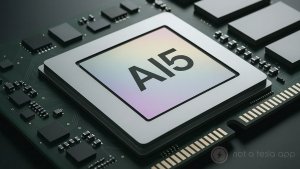
A5.5: It makes sense to upgrade cars that have less than HW4 or even any current cars, to upgrade them to a next-generation board with an upgraded AI chip, whether it be AI4.5 or AI5. AI5 will be in volume production hopefully next year, as the chip team has exceeded expectations with the design.
Q6: Pace of CapEx - is Tesla’s pace of CapEx capped because spending any more is impossible? What supply constraints are causing this?
A6: Tesla is spending CapEx as fast as it can, without it being wasteful. It isn’t aiming for perfectly efficient CapEx, but instead effective use of CapEx to continue moving fast. Tesla has plenty of capital to spend on CapEx projects and construction to continue its rapid growth.
New fabs and factories are taking up a lot of CapEx, but because they’re all different projects, they’re all growing quickly - like solar, batteries, cells, vertical integration, etc., Tesla is often its own general contractor for its facilities, because it does that much construction that quickly.
Follow-up: To what extent is energy storage supply constrained? To what extent are deployments peak-shaving limited at this point? What is the demand for data centres vs grid?
A6.5: It's not just peak-shaving but also grid balancing - wind and solar are massively augmented by batteries. There’s more power available from the sun - just a matter of storing it and using it. The biggest issue for hyperscalers and compute is power production, and Megapack provides a key part of the smoothing for high-intensity training runs to prevent grid damage. Batteries also enable grids to run 24/7, rather than scale down or turn off plants, which can be very costly for grid operators. That means battery storage even at datacenters helps to smooth grid operations.
Retail Q&A
Retail Q&A was also skipped, and integrated into Ashok’s special sections above. The questions below are the top five retail questions from Tesla’s Q&A site.
Q1: What are the main constraints to expanding robotaxi operations faster, and how do you see that lining up with Cybercab production?
Q2: What's the current status of Optimus Gen 3 production ramp, initial deployment in factories, and external sales timeline/volume for 2027? What tasks can we expect the Optimus to perform by the end of 2027?
Q3: Tesla has missed short term guidance on robotaxi 3 earnings reports in a row, from 50% coverage of USA by end of 2025 to most recently 7 new cities in 1H26. What is keeping Tesla back from accomplishing these short term goals that they've set for themselves?
Q4: To reward long term Tesla retail shareholders for their loyalty, can you commit to achieving at least half of the goals outlined in your 2025 compensation plan before considering any offers to acquire or merge Tesla?
Q5: Why has growth of robotaxi vehicles stalled? When will we see cybercab start customer rides?
Watch the Call
You can watch the entire earnings call at the link below, now that it has concluded.